Have you ever finished scrolling through yet another “make money online” article feeling more confused than when you started?
You’re not alone.
One website promises thousands of dollars with almost no effort. Another insists you can quit your job in a matter of weeks. Somewhere in between are dozens of platforms you’ve never heard of, each claiming to be the next big opportunity.
It’s no surprise so many beginners give up before they even begin.
The reality is much less dramatic—and much more encouraging.
There are legitimate websites where ordinary people earn real money every day. Some use them to cover monthly bills. Others build freelance careers, launch online businesses, or create additional income streams that grow over time.
The difference isn’t finding a secret website.
It’s knowing which platforms deserve your attention, understanding what they actually offer, and choosing the ones that fit your skills, schedule, and goals.
That’s exactly what this guide is designed to help you do.
Rather than overwhelming you with endless lists or unrealistic promises, you’ll discover 17 trusted websites that offer genuine opportunities for beginners. Some require no previous experience. Others reward skills you can develop as you go. Each one has been selected because it provides a realistic path toward earning online without relying on hype or shortcuts.
By the time you reach the end of this guide, you’ll understand:
- Which websites are easiest for beginners
- Which platforms offer the strongest long-term earning potential
- Where you can start with little or no experience
- What to expect before creating your first account
- Common mistakes that slow down new users
- How to choose opportunities that match your personal goals
Whether you’re hoping to earn a little extra each month or build something much bigger over time, every successful online journey begins the same way—with one informed decision.
Let’s make sure yours is a good one.
Table of Contents
- Why More People Are Choosing to Earn Money Online
- How We Chose These Legitimate Websites
- The 17 Best Websites to Earn Money Online for Beginners
- Side-by-Side Comparison of Every Platform
- How to Choose the Right Website for Your Goals
- Common Mistakes That Hold Beginners Back
- A Practical 30-Day Plan to Get Started
- Frequently Asked Questions
- SEO Resources and Publishing Assets
- Products, Tools & Resources
Why More People Are Choosing to Earn Money Online
Not long ago, earning an income almost always meant working in a physical location. Today, that picture looks very different.
Businesses collaborate with remote freelancers across continents. Small companies hire virtual assistants instead of expanding office space. Writers, designers, tutors, photographers, and consultants connect with clients they may never meet in person. Even people with no previous online work experience can complete digital tasks, test websites, or create products that reach customers around the world.
The internet hasn’t just changed where people work.
It has changed who gets the opportunity to work.
Someone living in a small town now has access to clients from major cities. A university student can build freelance experience before graduation. Parents can fit projects around family responsibilities. Retirees can stay active by sharing years of knowledge through online teaching or consulting.
The barriers that once limited opportunity continue to shrink.
That doesn’t mean earning money online is effortless.
It does mean that the starting line is closer than many people realize.
What Makes a Website Worth Your Time?
Not every platform deserves a place on your shortlist.
Some websites make impressive promises but offer very little once you sign up. Others bury opportunities behind expensive memberships or unrealistic requirements.
The platforms featured in this guide share one important characteristic:
They provide legitimate opportunities for beginners to earn by creating value.
Here’s what we looked for.
Easy to Join
The best beginner-friendly platforms don’t require large upfront investments.
You should be able to create an account, understand how the platform works, and begin exploring opportunities without taking unnecessary financial risks.
Friendly to Beginners
Everyone starts somewhere.
Some websites welcome newcomers by offering simple projects, guided onboarding, or opportunities that rely more on reliability and communication than years of professional experience.
That creates room to learn while you earn.
Flexible Around Your Schedule
One of the biggest advantages of online work is flexibility.
Whether you have thirty minutes during lunch breaks or several hours each evening, many platforms allow you to work when it fits your life rather than forcing you into fixed schedules.
This flexibility makes online income appealing to students, parents, professionals, and anyone looking for an additional source of earnings.
Reliable Payment Systems
Trust matters.
Every platform in this guide has an established reputation for paying users according to its published terms.
Before recommending any website, payment reliability, transparency, and overall reputation were considered alongside earning potential.
Room to Grow
Some opportunities help you earn a little extra.
Others become stepping stones toward freelance businesses, digital products, consulting services, or recurring client relationships.
Long-term growth matters just as much as your first payment.
Can You Really Earn Money Online as a Beginner?
It’s a fair question.
After all, the internet is full of stories that sound almost too good to believe.
The honest answer is yes—but probably not in the way social media often portrays it.
Most people don’t wake up one morning and suddenly replace their income overnight.
Instead, progress usually follows a much steadier path.
You create your first profile.
You complete your first task.
You earn your first review.
You become a little more confident.
You improve your skills.
You attract better opportunities.
Those small wins build on one another until something interesting happens.
What began as a side project starts looking like a genuine source of income.
The people who succeed online rarely discover a shortcut.
They simply keep showing up long enough for experience to compound.
What Can You Expect to Earn?
This is one of the first questions beginners ask—and understandably so.
The truth is that no platform can promise identical results for every person.
Income depends on several factors, including:
- The platform you choose
- The skills you bring
- The amount of time you invest
- The quality of your work
- Market demand
- Your consistency over time
Generally speaking, opportunities fall into a few broad categories.
| Platform Type | Typical Starting Potential | Long-Term Opportunity |
|---|---|---|
| Surveys & Microtasks | Extra spending money | Limited |
| Website Testing | Supplemental income | Moderate |
| Freelancing | Moderate | High |
| Virtual Assistance | Moderate | High |
| Online Tutoring | Moderate | High |
| Digital Products | Variable | Very High |
| Affiliate Marketing | Slow at first | Very High |
Notice the pattern.
The opportunities with the highest long-term potential usually reward skills, creativity, and experience rather than simple repetition.
That’s an important idea you’ll see throughout this guide.
How We Chose These Legitimate Websites
Search for ways to earn money online and you’ll find thousands of recommendations.
Unfortunately, quantity doesn’t equal quality.
Many lists recycle the same outdated platforms, recommend websites with questionable reputations, or include opportunities that simply aren’t practical for beginners.
This guide follows a different philosophy.
Every website earned its place by meeting clear standards designed around the needs of someone just getting started.
Reputation Comes First
Trust is non-negotiable.
Each platform included here has built a recognizable presence and a history of connecting users with genuine earning opportunities.
If a website raised consistent concerns about payments, transparency, or reliability, it didn’t make this list.
Accessibility Matters
A beginner shouldn’t need years of experience before earning their first dollar online.
We prioritized platforms that welcome newcomers while still offering room to grow into higher-paying opportunities.
Low Financial Risk
Learning something new already requires an investment of time.
It shouldn’t require a large financial commitment as well.
Most websites featured in this guide allow you to begin without expensive subscriptions or mandatory upfront costs.
Flexibility for Real Life
People come to online work for different reasons.
Some want extra income alongside full-time employment.
Others are balancing studies, raising children, or exploring new careers.
Flexible platforms make those goals much easier to achieve.
Growth Beyond the First Payment
Quick wins feel rewarding.
Long-term opportunities create lasting change.
Some websites on this list help you earn through small tasks. Others can become the foundation for freelance businesses, digital products, consulting services, or recurring client relationships.
Understanding that difference helps you invest your time more wisely.
One Important Perspective
As you move through this guide, you’ll notice something that many articles never mention.
Making money online isn’t really about websites.
Websites are simply tools.
Your communication skills, reliability, curiosity, willingness to learn, and ability to solve problems will ultimately determine how much value you create—and how much you’re paid in return.
That’s encouraging news.
Skills can be learned.
Experience can be built.
And every expert was once exactly where you are today: looking for a trustworthy place to begin.
Coming Up Next
In Part 2, we’ll begin exploring the first four websites on our list. You’ll learn what each platform is best known for, who it’s most suitable for, how beginners can get started, realistic earning expectations, and practical tips that can help you avoid common mistakes from day one.
Part 2: The First 4 Legit Websites to Earn Money Online for Beginners
Choosing your first platform is often harder than earning your first dollar.
Not because there aren’t enough options—but because there are too many.
When every website claims to be the “best,” it’s easy to bounce from one opportunity to another without ever giving any of them a real chance. That’s why the goal isn’t to join every platform you come across. It’s to find one that fits your strengths, your schedule, and the kind of work you actually enjoy.
Think of the next four websites as four different starting points.
Some are ideal if you want to build a freelance business. Others are perfect if you’d rather earn extra income in short bursts throughout the week. None of them promise instant wealth, but each offers something much more valuable: a legitimate way to start.
Recommended guide: 17 Legit Websites for Beginners to Make Money Online: The Honest Ranking by Cost, Skill, and Time to First Payout
1. Upwork
Best For
Beginners who want to build a freelance career with long-term income potential.
What Is Upwork?
Upwork is one of the largest freelance marketplaces in the world. Businesses post projects, freelancers submit proposals, and once both sides agree, the work begins.
What makes Upwork appealing isn’t just the number of available jobs—it’s the variety.
On any given day, businesses are looking for writers, virtual assistants, graphic designers, customer support specialists, researchers, translators, marketers, video editors, bookkeepers, and countless other professionals.
That variety creates opportunities for beginners who are willing to start small and build credibility over time.
What Kind of Work Can You Find?
Some of the most beginner-friendly categories include:
- Blog writing
- Article writing
- Data entry
- Virtual assistance
- Customer support
- Internet research
- Proofreading
- Social media assistance
- Basic graphic design
- Administrative tasks
You don’t need to master every skill.
In fact, you’ll often make faster progress by becoming known for doing one thing exceptionally well.
Getting Started
Creating an account only takes a few minutes, but building a profile deserves more attention.
Focus on showing potential clients how you can help rather than simply listing your skills.
Include:
- A professional photo
- A concise overview
- Relevant experience
- Portfolio samples whenever possible
- Clear descriptions of the services you provide
If you don’t have paid experience yet, include projects from school, volunteer work, personal websites, or practice assignments that demonstrate your abilities.
Everyone begins somewhere.
How Much Can You Earn?
There isn’t a single answer because earnings depend on your skills, pricing, client demand, and reputation.
Many freelancers begin with smaller projects to gain reviews before moving on to higher-paying work.
Over time, positive feedback often becomes your greatest marketing asset.
What You’ll Like
- Thousands of projects across many industries
- Flexible work schedule
- Opportunity to work with international clients
- Long-term contracts are common
- Excellent platform for building experience
Challenges to Expect
- Competition can be strong
- Winning your first project takes patience
- Building trust doesn’t happen overnight
A Tip That Makes a Difference
When applying for projects, resist the temptation to send the same proposal to everyone.
Read the job description carefully.
Respond to the client’s specific needs.
People don’t hire freelancers because they list impressive skills.
They hire freelancers who clearly understand the problem they’re trying to solve.
2. Fiverr
Best For
People who prefer selling services instead of chasing job postings.
What Is Fiverr?
Fiverr takes a different approach to freelancing.
Rather than searching through job listings every day, you create service packages—called gigs—and clients come to you.
Imagine opening a small online shop where your products happen to be services.
One gig might offer logo design.
Another could provide proofreading.
A third might help businesses write product descriptions or organize spreadsheets.
Instead of applying repeatedly for work, you’re building a storefront that attracts customers over time.
Popular Services for Beginners
Successful Fiverr sellers often start with services such as:
- Resume editing
- Blog proofreading
- Social media captions
- Logo creation
- Presentation design
- AI content editing
- Virtual assistance
- Photo editing
- Basic video editing
- Product description writing
The most successful profiles rarely offer everything.
They become known for solving one problem extremely well.
Getting Started
Begin with one or two carefully planned gigs.
Write descriptions that explain exactly what buyers will receive.
Add examples of your work whenever possible.
High-quality images, clear pricing, and detailed service descriptions make a significant difference.
Income Potential
Many freelancers begin with modest prices while collecting their first reviews.
As demand grows, you can introduce premium packages, offer faster delivery, or expand into related services.
For many sellers, one successful gig becomes the foundation for an entire freelance business.
Advantages
- Clients can discover your services through search
- Flexible pricing
- Repeat customers are common
- Ideal for creative professionals
- Easy to expand your offerings
Things to Keep in Mind
- Building visibility takes time
- Strong competition in popular categories
- Customer service plays an important role
A Practical Tip
Specific services usually outperform general ones.
Instead of offering “writing,” consider something more focused, like:
- Email newsletter writing
- SEO blog proofreading
- LinkedIn profile editing
- Product description writing
The clearer your offer, the easier it becomes for buyers to understand its value.
3. Swagbucks
Best For
People looking to earn extra money during their free time.
What Is Swagbucks?
Not everyone wants to launch a freelance business immediately.
Sometimes you simply want a way to earn a little extra while watching television, commuting, or relaxing in the evening.
That’s where Swagbucks fits.
Rather than paying for professional services, the platform rewards users for completing everyday online activities.
These aren’t life-changing opportunities, but they can be an easy introduction to earning money online.
Ways to Earn
Activities may include:
- Completing surveys
- Watching promotional videos
- Shopping through partner stores
- Playing selected games
- Trying new products
- Searching online
- Participating in promotional offers
Some tasks require only a few minutes.
Others take longer but offer higher rewards.
Getting Started
Registration is straightforward.
Once your profile is complete, you’ll be matched with available opportunities.
Providing accurate information improves your chances of receiving surveys that fit your background.
Income Potential
Swagbucks is best viewed as supplemental income.
It’s unlikely to replace a salary, but it can help cover small expenses or provide extra spending money throughout the month.
Advantages
- Easy to begin
- No professional experience required
- Flexible schedule
- Wide variety of simple activities
- Suitable for beginners
Limitations
- Lower earning potential
- Some surveys may not qualify every participant
- Availability varies
A Practical Tip
Don’t treat every activity equally.
Spend your time on higher-value opportunities rather than completing dozens of very small tasks.
Working smarter often produces better results than simply working longer.
4. UserTesting
Best For
People who enjoy sharing honest opinions about websites and apps.
What Is UserTesting?
Every website you’ve ever visited has one thing in common.
Someone wants to know whether it’s easy to use.
Businesses spend enormous amounts of time and money improving customer experiences, and one of the best ways to do that is by watching real people interact with their websites and applications.
That’s where UserTesting comes in.
Instead of looking for technical experts, companies want genuine users who can explain what feels confusing, frustrating, or surprisingly easy.
Your perspective becomes valuable because it’s authentic.
What Does a Test Look Like?
You might be asked to:
- Navigate a website
- Search for information
- Complete an online purchase
- Explore a mobile application
- Describe your first impressions
- Explain your thought process aloud
Most assignments involve speaking naturally while completing simple tasks.
There are no trick questions.
Companies simply want honest feedback.
Getting Started
New users typically:
- Create an account.
- Complete a short practice test.
- Demonstrate clear communication.
- Receive invitations for future studies.
The better your feedback, the more opportunities you’re likely to receive.
Income Potential
Payment varies depending on the length and complexity of each study.
Short usability tests generally pay less than live interviews or detailed research sessions.
Advantages
- Interesting work
- Flexible schedule
- No advanced technical knowledge required
- Helps improve products people use every day
- Ideal for beginners
Challenges
- Test invitations aren’t always consistent
- Some studies have specific qualification requirements
- Patience is sometimes required
A Practical Tip
Don’t rush through a test.
Speak naturally.
Explain what catches your attention, what feels confusing, and why you’re making each decision.
Thoughtful feedback is exactly what companies are paying for.
Comparing the First Four Websites
Each platform serves a different purpose.
Here’s a quick overview to help you decide where to begin.
| Website | Best For | Experience Needed | Long-Term Potential |
|---|---|---|---|
| Upwork | Freelancing | Beginner Friendly | High |
| Fiverr | Selling Services | Beginner Friendly | High |
| Swagbucks | Extra Spending Money | None | Limited |
| UserTesting | Website & App Feedback | None | Moderate |
Which One Fits You Best?
If you’re dreaming about replacing part of your income or building a freelance business, Upwork and Fiverr deserve your attention.
If your goal is simply to earn extra cash without learning a completely new profession, Swagbucks offers an easy starting point.
And if you enjoy exploring websites, trying new apps, and sharing honest feedback, UserTesting provides a unique way to earn while helping companies improve their products.
Whatever you choose, remember this:
The platform itself isn’t what creates success.
Your consistency does.
One completed project leads to one review.
One review builds trust.
Trust attracts better opportunities.
That’s how online careers grow—one small step at a time.
Coming Up Next
In Part 3, we’ll explore four more beginner-friendly platforms that introduce transcription, conversational tutoring, microtasks, and flexible online work. You’ll also see how different types of online jobs can complement one another as you begin building multiple income streams
Part 3: Websites 5–8 — Four More Legit Ways to Earn Money Online While Building Valuable Skills
By now, one thing is probably becoming clear.
There isn’t a single “best” website for making money online.
The right platform depends on where you are today—and where you want to be six months or even a few years from now.
Some people want flexible work they can fit around school or a full-time job. Others are searching for a career they can build from home. A few simply want to prove to themselves that earning online is actually possible.
No matter which category you fall into, the next four websites offer something important: they help you gain experience while getting paid.
That experience often becomes just as valuable as the income itself.
5. Rev
Best For
People who enjoy language, have strong attention to detail, and don’t mind focused, independent work.
What Is Rev?
If you’ve ever watched a video with captions or read a transcript of an interview, you’ve already seen the type of work Rev provides.
The platform connects freelancers with transcription, captioning, and subtitle projects submitted by businesses, educators, journalists, content creators, and media companies.
Unlike many online jobs that rely on speed alone, transcription rewards patience, accuracy, and careful listening.
For beginners who enjoy working quietly and independently, it can be a surprisingly satisfying way to earn money.
What You’ll Be Doing
Projects often include:
- Transcribing recorded conversations
- Creating captions for videos
- Editing subtitles
- Reviewing completed transcripts
- Formatting spoken content into readable text
Every assignment is different.
Some recordings are clear and straightforward. Others require concentration, especially when multiple speakers or background noise are involved.
Getting Started
The application process usually includes a short skills assessment designed to measure your listening ability, grammar, and attention to detail.
Once approved, you can browse available projects and accept work that fits your schedule.
As your accuracy improves, you’ll generally become more efficient and confident.
Income Potential
Earnings depend on several factors, including:
- Audio quality
- Typing speed
- Accuracy
- Project availability
- Time invested
Experienced transcriptionists often complete assignments much faster than beginners, allowing them to increase their hourly earnings over time.
Why People Like It
- Flexible schedule
- Work from almost anywhere
- No client outreach required
- Improves typing and language skills
- Quiet, independent work environment
Things to Consider
- Requires sustained concentration
- Audio quality isn’t always perfect
- Some projects take longer than expected
A Helpful Tip
Don’t focus only on typing faster.
Focus on becoming more accurate.
Correcting mistakes often takes more time than slowing down slightly and getting things right the first time.
6. Amazon Mechanical Turk (MTurk)
Best For
People who prefer completing short online tasks whenever they have free time.
What Is MTurk?
Amazon Mechanical Turk—often called MTurk—is built around small digital assignments that businesses need humans to complete.
Computers are incredibly efficient, but there are still many tasks that require human judgment.
That’s where MTurk comes in.
Instead of working on large projects, you’ll complete individual assignments known as Human Intelligence Tasks, or HITs.
Most take only a few minutes.
Some take even less.
Common Types of Tasks
You may come across work such as:
- Image categorization
- Survey participation
- Data verification
- Short research assignments
- Content moderation
- Information labeling
- Product comparisons
- Basic data collection
No two days look exactly the same, which makes the platform appealing to people who enjoy variety.
Getting Started
After creating an account, you’ll be able to browse available HITs.
Each task displays estimated completion time, payment, and requester information.
As you complete more work successfully, your approval rating grows.
A strong approval history often unlocks better opportunities.
Income Potential
MTurk is best viewed as supplemental income.
While some users complete large numbers of tasks each week, earnings depend heavily on task availability and the quality of assignments you choose.
Advantages
- Very beginner friendly
- Flexible working hours
- Large variety of tasks
- Easy to work in short sessions
- No specialized qualifications required for many projects
Challenges
- Payment varies significantly
- Popular tasks fill quickly
- Careful task selection is important
A Helpful Tip
Don’t judge every opportunity by its payout alone.
Sometimes a slightly lower-paying task from a reliable requester is a better long-term choice than chasing every high-paying listing.
Building a strong approval record creates more opportunities later.
7. Cambly
Best For
Confident English speakers who enjoy meeting people from different cultures.
What Is Cambly?
Teaching doesn’t always mean standing in front of a classroom.
Many language learners simply want someone to talk to.
Cambly connects English learners with conversational tutors who help students improve speaking confidence through relaxed, natural discussions.
For many beginners, that’s less intimidating than preparing formal lessons or grading assignments.
Your conversations might cover travel, business, hobbies, interviews, current events, or everyday life.
Every session is a little different because every student has different goals.
What You’ll Do
Typical conversations may involve:
- Casual speaking practice
- Pronunciation support
- Vocabulary development
- Interview preparation
- Business communication
- Everyday English
The goal isn’t perfection.
It’s helping students become more comfortable using English in real situations.
Getting Started
Most tutors begin by creating a profile and recording a short introduction video.
Students often watch these videos before deciding who they’d like to learn with, so a friendly, welcoming approach goes a long way.
Once approved, you can choose your availability and begin accepting sessions.
Income Potential
Your earnings depend largely on the number of conversations you complete and the amount of time you’re available.
Tutors who build strong relationships with students often enjoy regular bookings and repeat learners.
Why People Enjoy It
- Flexible schedule
- Meaningful conversations
- Opportunity to meet people worldwide
- Improves communication skills
- Work entirely online
Potential Challenges
- Demand changes throughout the day
- Strong communication skills are essential
- Some conversations require patience with beginner learners
A Helpful Tip
People rarely remember the tutor with perfect grammar.
They remember the tutor who made them feel comfortable speaking.
Creating a positive learning experience often matters just as much as teaching the language itself.
8. Clickworker
Best For
Beginners looking for flexible online work with a wide variety of projects.
What Is Clickworker?
Clickworker offers short online assignments for businesses that need human input.
Think of it as a collection of many different small jobs rather than one specific role.
One day you might review product information.
The next, you could categorize images, write short descriptions, verify data, or help organize information used to improve digital services.
This variety makes the platform appealing for people who enjoy learning new tasks instead of repeating the same assignment every day.
Typical Projects
Available work may include:
- Data categorization
- Writing product descriptions
- Internet research
- Proofreading
- Image labeling
- AI data annotation
- Content review
- Information verification
The types of projects available often expand as you complete optional assessments.
Getting Started
Registration is simple.
After creating your account, complete your profile carefully and take any available qualification tests.
Those assessments often unlock additional work that isn’t visible to every user.
Income Potential
Income depends on:
- Available projects
- Qualifications
- Accuracy
- Consistency
Workers who qualify for specialized assignments generally have access to higher-paying opportunities.
Advantages
- Easy entry for beginners
- Flexible schedule
- Variety of project types
- Opportunity to develop new skills
- Additional qualifications increase opportunities
Things to Know
- Work volume changes over time
- Some projects disappear quickly
- Income isn’t always predictable
A Helpful Tip
Treat every qualification test as an investment.
Spending a little extra time improving your profile today can unlock opportunities that continue paying off long into the future.
Comparing Websites 5–8
Each of these platforms serves a different type of worker.
Here’s a quick comparison to make choosing easier.
| Website | Best For | Experience Needed | Long-Term Potential |
|---|---|---|---|
| Rev | Transcription | Beginner Friendly | Moderate |
| MTurk | Microtasks | None | Limited |
| Cambly | Conversational Tutoring | Beginner Friendly | Good |
| Clickworker | Flexible Online Tasks | None | Moderate |
Which Platform Matches Your Personality?
If you enjoy working quietly and paying close attention to detail, Rev offers structured projects where accuracy matters.
If you prefer completing quick tasks throughout the day without committing to large projects, MTurk provides plenty of variety.
If conversations energize you and you enjoy helping others build confidence, Cambly can be a rewarding option that combines income with meaningful interaction.
If you like switching between different kinds of work and learning new digital skills, Clickworker offers one of the most varied experiences on this list.
A Pattern Worth Noticing
Take a moment to look beyond the platforms themselves.
Each one teaches something valuable.
Rev improves listening and accuracy.
MTurk develops consistency and attention to detail.
Cambly strengthens communication and interpersonal skills.
Clickworker introduces you to the kind of digital tasks businesses outsource every day.
Those skills don’t disappear when you leave a platform.
They travel with you.
That’s one of the hidden advantages of earning money online.
You’re not just collecting payments.
You’re building experience that makes future opportunities easier to reach.
And in many cases, that’s the investment with the greatest long-term return.
Coming Up Next
In Part 4, we’ll shift from earning by completing tasks to creating assets that can continue generating income over time. You’ll discover platforms where digital products, online courses, writing, photography, and creative work can grow into scalable income streams rather than one-time payments.
Part 4: Websites 9–12 — Create Once, Earn Again: Platforms That Reward Creativity
There’s a noticeable shift as you move through this list.
The first websites focused largely on exchanging your time for money. You completed a task, finished a project, or helped a client—and got paid.
The next group works a little differently.
Instead of selling hours, you’re creating something with lasting value.
A printable planner can be downloaded hundreds of times.
An online course can teach thousands of students.
A helpful article can attract readers for months.
A single photograph can be licensed again and again.
These platforms introduce an idea that many successful online entrepreneurs eventually embrace:
The most valuable work often keeps working long after you’ve finished creating it.
9. Etsy
Best For
Creative people who want to sell digital products, printable files, or handmade items.
What Is Etsy?
Etsy began as a marketplace for handmade products, but today it’s also one of the most popular places to sell digital downloads.
That’s good news for beginners.
Digital products don’t require inventory, packaging, or shipping. Once your product is finished and listed, customers can purchase and download it automatically.
You’re creating something once that has the potential to generate sales repeatedly.
That simple idea is what attracts so many creators to the platform.
What Can You Sell?
Some of the most successful beginner-friendly products include:
- Printable planners
- Budget trackers
- Wedding invitations
- Digital journals
- Wall art
- Resume templates
- Business forms
- Study planners
- Habit trackers
- Social media templates
Notice a pattern?
Most popular products solve everyday problems.
People aren’t buying files.
They’re buying convenience, organization, inspiration, or saved time.
Getting Started
Opening a shop is only the beginning.
Spend time choosing a niche instead of creating products for everyone.
Write detailed product descriptions.
Use clear, attractive images.
Choose keywords that describe exactly what your customer is searching for.
A well-presented listing builds confidence before a buyer even clicks the purchase button.
Income Potential
Some products generate occasional sales.
Others continue selling month after month.
Your results depend on product quality, niche selection, search visibility, pricing, and the size of your catalog.
Many successful sellers gradually build dozens—or even hundreds—of listings over time.
What Makes Etsy Appealing
- Digital products require no shipping
- Products can sell repeatedly
- Large customer marketplace
- Opportunity to build your own brand
- Flexible schedule
Challenges to Expect
- Competition exists in popular categories
- Strong product presentation matters
- Creating quality products takes time
A Practical Tip
Before designing anything, ask yourself one question:
“What problem does this solve?”
The clearer your answer, the easier it becomes to create products customers genuinely want.
10. Teachable
Best For
People who enjoy explaining ideas and helping others learn.
What Is Teachable?
Most people underestimate what they know.
You don’t have to be the world’s leading expert to teach something valuable.
If you’ve learned a skill that could save someone time, reduce frustration, or help them reach a goal faster, there’s a good chance someone would appreciate learning from you.
Teachable allows creators to organize that knowledge into structured online courses.
Instead of selling your time one hour at a time, you’re creating lessons students can access whenever they’re ready.
Course Ideas
You don’t need an advanced degree to create a useful course.
Popular topics include:
- Personal budgeting
- Photography basics
- Graphic design
- Cooking
- Fitness
- Study techniques
- Language learning
- Productivity systems
- Resume writing
- Software tutorials
The best courses don’t try to teach everything.
They solve one specific problem exceptionally well.
Getting Started
Begin with a clear outcome.
Ask yourself:
“What will someone be able to do after finishing this course?”
That answer becomes the foundation for every lesson you create.
Outline your modules.
Record clear videos.
Add worksheets or downloadable resources when appropriate.
Then continue improving your course as students provide feedback.
Income Potential
Unlike freelance work, courses aren’t limited by your available hours.
One course can continue enrolling students while you focus on creating additional content or improving existing lessons.
Why Creators Choose Teachable
- Scalable income potential
- Opportunity to build authority
- Sell courses repeatedly
- Reach students around the world
- Expand into additional educational products
Things to Keep in Mind
- Course creation requires planning
- Marketing plays an important role
- High-quality content takes time to produce
A Practical Tip
Avoid creating a course that’s too broad.
Students are usually searching for a solution—not an encyclopedia.
Focused courses often receive stronger reviews because learners achieve results more quickly.
11. Medium
Best For
Writers who enjoy sharing ideas, experiences, and practical advice.
What Is Medium?
Medium is more than a publishing platform.
It’s a community built around thoughtful writing.
Unlike launching your own website from day one, Medium gives new writers access to an established audience that’s already looking for useful articles, personal stories, and insightful perspectives.
For beginners, that removes one of the biggest obstacles:
Finding readers.
What Should You Write About?
The best topics often come from real experience.
Popular categories include:
- Personal finance
- Productivity
- Career development
- Technology
- Self-improvement
- Entrepreneurship
- Travel
- Health
- Education
- Lifestyle
People don’t return because an article contains perfect keywords.
They return because the writing helps them think differently or solve a problem.
Getting Started
Choose a topic you genuinely enjoy discussing.
Write consistently.
Focus on helping readers rather than chasing trends.
As your library of articles grows, so does your opportunity to build credibility and attract a loyal audience.
Income Potential
Reader engagement influences earnings.
Some articles gain momentum gradually, attracting readers long after they’re published.
Others perform well because they answer questions people continue searching for over time.
Consistency matters far more than chasing viral success.
Advantages
- Existing audience
- Simple publishing process
- Excellent writing practice
- Opportunity to build a portfolio
- Helps establish personal authority
Challenges
- Audience growth takes time
- Income can vary
- Quality consistently outperforms quantity
A Practical Tip
Write the article you wish you’d found when you were learning.
That perspective naturally creates useful, relatable content.
12. Shutterstock Contributor
Best For
Photographers, illustrators, and designers who want to earn from their creative work.
What Is Shutterstock Contributor?
Every day, businesses search for images they can use in websites, advertisements, presentations, blogs, social media campaigns, and marketing materials.
Instead of hiring photographers for every project, many license existing images from stock libraries.
As a contributor, you create original visual content and upload it to your portfolio.
Each approved download earns royalties.
One photograph may be licensed dozens—or even hundreds—of times.
What Can You Upload?
Popular content includes:
- Business photography
- Food photography
- Travel images
- Lifestyle photos
- Nature scenes
- Vector graphics
- Icons
- Illustrations
- Background textures
- Marketing visuals
Practical images often perform better than highly artistic ones because businesses search for visuals they can immediately use.
Getting Started
Create your contributor account.
Upload original work.
Write accurate titles.
Add descriptive keywords.
Submit your files for review.
Then continue expanding your portfolio over time.
Think of each upload as another digital asset working on your behalf.
Income Potential
One image rarely changes everything.
A growing portfolio often does.
Contributors who consistently publish useful content increase their chances of generating recurring royalties.
Why It’s Worth Considering
- Earn from work you’ve already created
- Flexible schedule
- Portfolio grows over time
- Potential for recurring downloads
- Global customer base
Challenges
- Approval standards must be met
- Competition is strong
- Success usually comes through consistency rather than individual uploads
A Practical Tip
When deciding what to photograph or design, think commercially.
Ask yourself:
“Could a business use this in a presentation, advertisement, or website?”
That simple shift in perspective often leads to more marketable content.
Comparing Websites 9–12
Each platform rewards creativity in a different way.
| Website | Best For | Experience Needed | Long-Term Potential |
|---|---|---|---|
| Etsy | Digital Products | Beginner Friendly | Excellent |
| Teachable | Online Courses | Beginner to Intermediate | Excellent |
| Medium | Writing | Beginner Friendly | High |
| Shutterstock Contributor | Photography & Design | Beginner Friendly | High |
Which Creative Path Fits You?
Choose Etsy if you enjoy designing practical products that solve everyday problems.
Choose Teachable if you like breaking complex ideas into simple lessons and helping others learn.
Choose Medium if writing feels natural and you enjoy exploring ideas through stories, tutorials, or personal experience.
Choose Shutterstock Contributor if you already create photographs, illustrations, or graphics that businesses could use professionally.
There isn’t a wrong choice.
The best platform is usually the one that matches work you’d enjoy creating even before the first sale arrives.
Why These Platforms Feel Different
Earlier in this guide, most opportunities rewarded completed tasks.
These websites reward ownership.
Every product you publish…
Every article you write…
Every lesson you record…
Every image you upload…
…becomes part of a growing collection of assets.
Some perform modestly.
Others surprise you months later by continuing to attract readers, customers, or students.
That’s one of the most exciting aspects of creating online.
You’re no longer starting from zero each day.
You’re gradually building a library of work that can continue opening doors long after you’ve pressed “Publish.”
Coming Up Next
In Part 5, we’ll explore four more platforms focused on remote work, virtual assistance, affiliate marketing, and AI-related opportunities. If you’re interested in building a sustainable online career—or positioning yourself for industries that continue to grow—these websites deserve a place on your shortlist.
Part 5: Websites 13–16 — From Side Income to Sustainable Online Work
By now, you’ve seen two very different ways to earn online.
The first is straightforward: complete a task, finish a project, receive payment.
The second is more strategic: create something valuable today that continues working for you tomorrow.
The next four platforms introduce a third path.
These websites aren’t just places to make money—they’re places where you can build a career, develop professional relationships, and gain experience that becomes more valuable over time.
If you’ve ever imagined working remotely, supporting businesses from anywhere, or becoming part of industries that continue to grow, this section is for you.
13. FlexJobs
Best For
People searching for legitimate remote jobs with established employers.
What Is FlexJobs?
Looking for remote work can feel overwhelming.
Search any job board and you’ll find thousands of listings, but not all of them are genuine. Some contain outdated information, while others promise flexible work without offering much transparency.
FlexJobs was created to solve that problem.
Instead of listing every available remote position, the platform focuses on curated opportunities from employers offering remote, freelance, hybrid, and flexible roles across many industries.
For beginners, that extra layer of screening can save hours of searching.
What Kind of Jobs Are Available?
The range is surprisingly broad.
Common categories include:
- Customer service
- Administrative support
- Writing and editing
- Marketing
- Graphic design
- Bookkeeping
- Human resources
- Sales support
- Project coordination
- Technology roles
Many positions are suitable for professionals changing careers or expanding their skills into remote work.
Getting Started
Treat your profile like your professional introduction.
Update your resume.
Highlight transferable skills.
Tailor each application to the position instead of sending identical submissions.
Employers notice thoughtful applications.
Income Potential
Income depends on the position, company, and experience required.
Unlike project-based freelance work, many remote jobs provide greater stability through regular hours and ongoing employment.
Why People Use FlexJobs
- Curated remote opportunities
- Broad range of industries
- Flexible work arrangements
- Reduced risk of fraudulent listings
- Suitable for both beginners and experienced professionals
Things to Remember
- Popular roles attract many applicants
- Strong applications matter
- Patience is often rewarded
A Practical Tip
Instead of applying for dozens of jobs in one afternoon, spend more time creating fewer, stronger applications.
A thoughtful application almost always stands out more than a rushed one.
14. Belay
Best For
Organized people who enjoy helping businesses stay productive.
What Is Belay?
Behind every successful business is someone keeping everything organized.
Appointments need scheduling.
Emails require responses.
Projects have deadlines.
Documents need updating.
Meetings have to be coordinated.
Belay connects businesses with professional virtual assistants who handle these responsibilities remotely.
If you’re naturally organized and enjoy bringing structure to busy environments, this type of work can be both rewarding and financially sustainable.
What Does a Virtual Assistant Do?
Responsibilities often include:
- Managing calendars
- Organizing email inboxes
- Scheduling meetings
- Preparing documents
- Coordinating projects
- Researching information
- Communicating with clients
- Administrative support
Every client is different, which keeps the work interesting.
Getting Started
Before applying, think about experiences that demonstrate organization.
Perhaps you’ve coordinated events, managed schedules, supported colleagues, or handled administrative responsibilities in previous jobs.
Those experiences matter.
Virtual assistance is often less about technical expertise and more about reliability, communication, and attention to detail.
Income Potential
Many assistants begin with general administrative work before specializing.
Specialists who understand particular industries or software tools often command higher rates and build long-term client relationships.
Advantages
- Professional remote work
- Consistent client relationships
- Opportunity to develop valuable business skills
- Flexible work environment
- Clear career progression
Challenges
- Excellent communication is essential
- Organization becomes increasingly important
- Client expectations vary
A Practical Tip
Create systems.
Successful virtual assistants don’t rely on memory.
They rely on calendars, checklists, reminders, and organized workflows that help them deliver consistently excellent work.
15. PartnerStack
Best For
People interested in affiliate marketing and content creation.
What Is PartnerStack?
Imagine recommending a product you genuinely find useful—and earning a commission when someone decides it’s helpful for them too.
That’s the basic idea behind affiliate marketing.
PartnerStack connects businesses with creators, educators, marketers, bloggers, and professionals who introduce their products to new customers.
Unlike freelancing, you’re not exchanging hours for income.
Instead, you’re creating recommendations that have the potential to generate ongoing commissions.
How Affiliate Marketing Works
The process is surprisingly simple.
- Join an affiliate program.
- Receive a unique referral link.
- Recommend products honestly.
- Someone purchases through your link.
- You receive a commission.
The concept is straightforward.
The real challenge is building trust.
People rarely buy because they’re pressured.
They buy because they believe your recommendation will genuinely help them.
Where Can You Share Affiliate Links?
Successful affiliates often publish helpful content through:
- Blogs
- YouTube channels
- Email newsletters
- Podcasts
- Social media
- Online communities
The common thread isn’t promotion.
It’s education.
Helpful content builds trust naturally.
Income Potential
Affiliate income varies widely.
Some creators earn occasional commissions.
Others build extensive libraries of articles and videos that continue generating referrals long after publication.
Like many online businesses, consistency matters more than speed.
Why It’s Worth Considering
- Flexible schedule
- Scalable earning potential
- No customer support responsibilities
- Opportunity for recurring commissions
- Complements other online businesses
Challenges
- Building an audience takes time
- Results aren’t immediate
- Trust must be earned
A Practical Tip
Only recommend products you would confidently suggest to a friend.
Authenticity creates loyal audiences.
Loyal audiences create long-term businesses.
16. Outlier
Best For
People curious about artificial intelligence, research, and emerging technology.
What Is Outlier?
Artificial intelligence may be advancing rapidly, but it still depends on human expertise.
AI systems learn through enormous amounts of carefully reviewed information.
That creates opportunities for people who can evaluate responses, verify facts, solve reasoning problems, and improve training data.
Outlier connects contributors with projects designed to improve the quality and accuracy of AI systems.
It’s one of the newest categories of online work—and one that continues to evolve quickly.
What Kind of Work Might You Do?
Projects may include:
- Evaluating AI responses
- Fact-checking information
- Writing prompts
- Comparing answers
- Research tasks
- Language projects
- Data annotation
- Quality reviews
Depending on your background, some assignments may require specialized knowledge in subjects such as mathematics, science, programming, finance, or languages.
Others focus more on careful reasoning and attention to detail.
Getting Started
After creating a profile, you’ll usually complete qualification assessments that help match you with appropriate projects.
Your experience, education, and demonstrated abilities influence the types of assignments available.
Accuracy is especially important because the quality of your work directly affects future opportunities.
Income Potential
Compensation varies according to project complexity and required expertise.
More specialized work generally commands higher rates than general evaluation tasks.
Advantages
- Flexible remote work
- Exposure to a rapidly growing industry
- Variety of interesting projects
- Opportunity to develop valuable analytical skills
- Suitable for lifelong learners
Challenges
- Project availability changes over time
- Qualification assessments are common
- Some work requires specialized knowledge
A Practical Tip
Slow down.
Many contributors focus on completing tasks quickly.
The strongest contributors focus on getting them right.
Careful thinking is one of the most valuable skills in AI-related work.
Comparing Websites 13–16
Each platform supports a different career path.
| Website | Best For | Experience Needed | Long-Term Potential |
|---|---|---|---|
| FlexJobs | Remote Employment | Beginner Friendly | Excellent |
| Belay | Virtual Assistance | Beginner Friendly | Excellent |
| PartnerStack | Affiliate Marketing | Beginner Friendly | Excellent |
| Outlier | AI Projects | Beginner to Advanced | High |
Which Direction Feels Right?
If stability matters most, FlexJobs offers access to remote opportunities with established employers.
If you enjoy organization and helping businesses operate more efficiently, Belay can become the foundation for a rewarding virtual assistance career.
If writing, teaching, reviewing products, or building an audience sounds exciting, PartnerStack introduces you to affiliate marketing—a business model that often grows alongside blogs, newsletters, podcasts, and YouTube channels.
And if you’re fascinated by technology and enjoy analytical work, Outlier provides a glimpse into one of the fastest-growing areas of the online economy.
What High Earners Have in Common
Take a step back and look beyond the websites themselves.
The people who consistently earn the most online aren’t constantly searching for the next platform.
They’re becoming better at what they already do.
They communicate clearly.
They meet deadlines.
They solve problems.
They continue learning.
Over time, clients notice.
Employers notice.
Customers notice.
That’s when opportunities begin finding them instead of the other way around.
It’s an important shift.
Instead of asking, “Where can I make money online?”
You begin asking,
“How can I become more valuable?”
The answer to that question has a habit of opening far more doors than any single website ever could.
Coming Up Next
In Part 6, we’ll cover the final website on our list before bringing all 17 platforms together in one easy-to-compare guide. You’ll see which websites are best for complete beginners, which offer the highest long-term earning potential, and how to combine multiple income streams without feeling overwhelmed.
Part 6: Website 17 + The Complete Comparison Guide
By this stage, you’ve explored opportunities that cover nearly every corner of the online economy.
You’ve seen platforms built for freelancers, writers, tutors, photographers, designers, virtual assistants, affiliate marketers, and even people interested in contributing to AI projects.
There’s just one more platform to add before we bring everything together.
If your goal is to build a sustainable freelance business—not just complete occasional gigs—this final website deserves your attention.
17. PeoplePerHour
Best For
Freelancers who want another reliable place to find clients and grow a long-term business.
What Is PeoplePerHour?
Every freelancer eventually learns an important lesson:
Depending on a single source of clients can be risky.
That’s why experienced freelancers often maintain a presence on more than one marketplace.
PeoplePerHour gives businesses a place to hire professionals for everything from one-time projects to ongoing support. For freelancers, it creates another channel for finding work, building relationships, and expanding their client base.
Like other freelance marketplaces, success doesn’t happen overnight.
But once you’ve established a reputation, repeat work becomes far easier to secure.
Services You Can Offer
The platform supports a wide range of professional services, including:
- Content writing
- Copywriting
- Proofreading
- Graphic design
- Logo design
- Website development
- Virtual assistance
- Search engine optimization
- Social media management
- Translation
- Digital marketing
- Administrative support
One of the biggest advantages is flexibility.
You can respond to project listings, create fixed-price service packages, or combine both approaches.
Getting Started
A strong profile is your most valuable marketing tool.
Take time to:
- Write a clear introduction.
- Explain the problems you solve.
- Showcase your best work.
- Add portfolio samples whenever possible.
- Create focused service offerings instead of broad, generic ones.
Clients don’t just compare prices.
They compare confidence, professionalism, and clarity.
Income Potential
Like any freelance platform, your earnings depend on factors such as:
- Experience
- Portfolio quality
- Client demand
- Pricing strategy
- Reviews
- Communication
Freelancers who consistently deliver excellent work often find themselves working with repeat clients instead of constantly searching for new ones.
That’s where freelancing begins to feel less like gig work and more like running a business.
Why People Choose PeoplePerHour
- Flexible working hours
- Wide range of industries
- Opportunity for repeat clients
- Fixed-price and hourly projects
- Suitable for long-term freelancing
Challenges
- Building trust takes time
- Competition exists in popular categories
- Strong communication is essential
A Practical Tip
Don’t compete by being the cheapest freelancer.
Compete by being the easiest person to work with.
Clients remember reliability long after they’ve forgotten who submitted the lowest quote.
Comparing All 17 Websites
After exploring every platform in detail, it’s much easier to see how each one fits into the bigger picture.
Some websites help you earn extra money during your spare time.
Others can grow into full-time careers or scalable online businesses.
Here’s a side-by-side comparison.
| Website | Best For | Beginner Friendly | Long-Term Potential |
|---|---|---|---|
| Upwork | Freelancing | ✔ | Excellent |
| Fiverr | Selling Services | ✔ | Excellent |
| Swagbucks | Small Online Tasks | ✔ | Limited |
| UserTesting | Website Testing | ✔ | Moderate |
| Rev | Transcription | ✔ | Good |
| Amazon Mechanical Turk | Microtasks | ✔ | Limited |
| Cambly | Conversational Tutoring | ✔ | Good |
| Clickworker | Flexible Online Tasks | ✔ | Moderate |
| Etsy | Digital Products | ✔ | Excellent |
| Teachable | Online Courses | ✔ | Excellent |
| Medium | Writing | ✔ | High |
| Shutterstock Contributor | Photography & Design | ✔ | High |
| FlexJobs | Remote Jobs | ✔ | Excellent |
| Belay | Virtual Assistance | ✔ | Excellent |
| PartnerStack | Affiliate Marketing | ✔ | Excellent |
| Outlier | AI Projects | ✔ | High |
| PeoplePerHour | Freelancing | ✔ | Excellent |
Which Website Should You Choose?
This is probably the question you’ve been asking since the beginning.
The honest answer is that there isn’t one perfect platform.
There is only the platform that’s right for you.
Let’s make that decision a little easier.
If You Want to Earn Extra Money in Your Free Time
You don’t necessarily need a portfolio or years of experience.
Start with:
- Swagbucks
- UserTesting
- Clickworker
- Amazon Mechanical Turk
These platforms allow you to earn while learning how online work operates.
If You Want to Build a Freelance Career
Choose platforms where your reputation becomes more valuable over time.
Recommended options include:
- Upwork
- Fiverr
- PeoplePerHour
As your reviews improve and your portfolio grows, attracting better-paying clients becomes much easier.
If You Want Stable Remote Work
Some people prefer regular employment instead of freelance projects.
Consider:
- FlexJobs
- Belay
These platforms focus on longer-term professional opportunities rather than individual gigs.
If You Want Passive Income
Building passive income takes work at the beginning, but the potential rewards are significant.
Strong choices include:
- Etsy
- Teachable
- Shutterstock Contributor
- PartnerStack
These platforms allow your work to continue generating value after it’s been published.
If You Enjoy Creative Work
If creating is what energizes you, consider:
- Etsy
- Medium
- Shutterstock Contributor
- Fiverr
Writing, design, photography, and digital products all have room to grow into sustainable businesses.
If You’re Interested in Emerging Technology
Artificial intelligence continues creating new opportunities for thoughtful contributors.
Platforms such as Outlier provide a way to build experience in a field that’s expanding rapidly while developing valuable analytical skills.
Can You Use More Than One Website?
Absolutely.
In fact, many successful online professionals eventually do.
The key word, however, is eventually.
One of the biggest mistakes beginners make is opening accounts on ten different websites during their first week.
The excitement is understandable.
The results usually aren’t.
Every platform has its own learning curve.
Its own expectations.
Its own community.
Trying to master all of them at once often leads to frustration instead of progress.
A better strategy is surprisingly simple.
Start with one.
Learn it well.
Build confidence.
Earn your first reviews.
Then expand naturally.
A Smarter Way to Build Multiple Income Streams
Imagine this progression.
You begin by freelancing on Upwork.
While working with clients, you notice people repeatedly ask the same questions.
You turn those answers into blog articles on Medium.
Later, those articles inspire digital templates you sell on Etsy.
Eventually, you recommend helpful software through PartnerStack.
Suddenly, one skill has created several connected income streams.
That’s how many successful online businesses evolve.
Not through chasing every opportunity.
Through allowing one opportunity to lead naturally to the next.
The Real Investment Isn’t Time
Most beginners believe they’re investing time.
They’re actually investing something much more valuable.
Experience.
Every proposal teaches communication.
Every client improves confidence.
Every project strengthens your portfolio.
Every challenge develops problem-solving skills.
Those lessons don’t stay on one website.
They become part of everything you do afterward.
That’s why experienced freelancers often appear to make progress faster.
They’re benefiting from years of accumulated knowledge.
The good news?
Everyone starts building that experience with the very first project.
Don’t Measure Success Too Early
One of the easiest ways to lose motivation is to compare your first month with someone else’s fifth year.
Instead, compare yourself with yesterday.
Did you improve your profile?
Did you send another proposal?
Did you publish another article?
Did you create another product?
Small improvements often feel insignificant in the moment.
Months later, they become impossible to ignore.
Progress compounds quietly.
Then, almost without warning, people begin calling it success.
Coming Up Next
In Part 7, we’ll answer the questions nearly every beginner asks before earning their first dollar online—from avoiding scams and understanding payments to choosing the right platform, staying motivated, and building confidence during those crucial early weeks.
Part 7: Frequently Asked Questions Every Beginner Eventually Asks
If you’ve made it this far, chances are you’re no longer wondering whether it’s possible to earn money online.
You’re wondering how it actually works in the real world.
That’s an important shift.
Most people never get beyond curiosity. They read a few articles, watch a handful of videos, and convince themselves they’ll “start next week.”
The people who eventually succeed ask different questions.
They stop looking for shortcuts and start looking for clarity.
The questions below are the same ones nearly every beginner asks before landing a first client, making a first sale, or receiving a first payment.
“Can someone with absolutely no experience really make money online?”
Yes.
Everyone starts without experience.
The first freelancer once had no clients.
The first online tutor once taught no students.
The first designer once had an empty portfolio.
Experience isn’t something you have before you begin.
It’s something you earn by beginning.
Many of the platforms in this guide were created specifically to help newcomers gain practical experience while earning income.
The important part is choosing work that’s realistic for your current skill level and improving with every project you complete.
Recommended guide: No Experience? Here’s the Simplest Money-Making Website You Can Build for Under $100
“Which website should I start with?”
There’s no universal answer because people have different goals.
Ask yourself one simple question:
“What kind of work do I actually enjoy?”
If you enjoy writing, start with freelance writing or publishing.
If you’re organized, virtual assistance may feel natural.
If you’re creative, digital products or design might be a better fit.
If you’re simply curious about earning online, website testing or microtasks provide a gentle introduction.
The best platform is often the one you’ll still enjoy using after the excitement of the first week wears off.
“How long does it take before I earn my first payment?”
Sometimes it’s quick.
Sometimes it isn’t.
It depends on the platform you choose, how much time you invest, and how consistently you show up.
Microtask websites may provide opportunities almost immediately.
Freelancing usually requires more patience because finding your first client takes time.
That first project is often the hardest.
After that, every review, completed project, and satisfied customer makes the next opportunity a little easier to win.
Momentum matters.
“Can I earn a full-time income online?”
Yes.
Thousands of people do.
But they rarely reach that point overnight.
For most people, the journey looks something like this:
They begin with a few hours each week.
Then they develop a valuable skill.
They build a portfolio.
Clients begin returning.
Rates gradually increase.
One income stream becomes two.
Eventually, online work grows into something much larger than they originally imagined.
The process is gradual—but very real.
“Do I need expensive equipment?”
Not usually.
For many beginner-friendly platforms, a reliable computer and stable internet connection are enough.
As your work becomes more specialized, you may eventually invest in better equipment.
A designer might upgrade their monitor.
A tutor may purchase a higher-quality microphone.
A photographer might improve their camera.
Those investments typically come after you’ve already started earning—not before.
Don’t let imperfect equipment become an excuse for delaying your first step.
“What if I don’t have any skills?”
You probably have more than you realize.
Think about things people regularly ask you for help with.
Maybe you’re organized.
Maybe you explain ideas clearly.
Maybe you’re good at writing emails, solving problems, researching information, or managing schedules.
Those are skills.
And skills can always be improved.
The internet is full of free educational resources that make learning more accessible than ever.
Instead of asking,
“Do I have enough skills?”
try asking,
“Which skill am I willing to improve?”
That question leads somewhere much more productive.
“Are these websites available worldwide?”
Many of them are.
However, availability, payment methods, and project volume vary depending on your country.
Before creating an account, always check:
- Supported countries
- Payment options
- Identity verification requirements
- Tax responsibilities
- Withdrawal methods
Taking a few minutes to understand these details can save frustration later.
“How do I avoid scams?”
Unfortunately, online scams do exist.
Fortunately, many of them share similar warning signs.
Be cautious if a website:
- Guarantees unusually high income with little effort.
- Requires large upfront payments.
- Pressures you to recruit other people.
- Doesn’t clearly explain how payments work.
- Makes unrealistic promises.
- Provides little information about the company behind it.
Healthy skepticism is one of the most valuable skills you can develop online.
If something feels suspicious, take time to research it before moving forward.
“Why do some people succeed while others give up?”
This question has surprisingly little to do with talent.
More often, it comes down to expectations.
Some people expect immediate results.
When those results don’t appear, they move to another platform.
Then another.
Then another.
Eventually, they conclude that earning online doesn’t work.
Meanwhile, someone else quietly stays with one platform, improves one skill, completes one project after another, and gradually builds a reputation.
Months later, those two people have completely different experiences—even though they started in the same place.
Consistency almost always beats constant restarting.
“Should I work on multiple websites at once?”
Eventually, yes.
At the beginning, probably not.
Imagine learning to play the guitar.
You wouldn’t practice six instruments simultaneously.
Online work follows a similar principle.
Choose one platform.
Understand how it works.
Build confidence.
Develop routines.
Then expand naturally.
Growth becomes much easier when it’s built on a strong foundation.
“How do I get clients if nobody knows me?”
This feels intimidating at first.
But remember:
Every experienced freelancer once had zero reviews.
Every successful consultant once had no clients.
People aren’t expecting you to have decades of experience.
They’re looking for someone who communicates clearly, understands their needs, and delivers quality work.
Start small.
Do excellent work.
Collect positive feedback.
Trust grows one interaction at a time.
“What’s the fastest way to increase my income?”
The answer surprises many beginners.
It’s usually not finding another platform.
It’s becoming better at the one you’re already using.
Improving your skills allows you to:
- Charge higher rates.
- Complete work more efficiently.
- Attract better clients.
- Earn stronger reviews.
- Receive repeat business.
The biggest increases in income often come from increasing your value—not increasing the number of hours you work.
“Will artificial intelligence replace online jobs?”
Technology continues changing the way people work.
Some tasks become automated.
New opportunities appear.
The people who adapt usually benefit the most.
Skills such as communication, creativity, critical thinking, relationship building, teaching, consulting, and problem-solving continue to be highly valuable because they depend on human judgment.
Rather than competing with technology, learn how to use it as a tool that helps you work more effectively.
“What’s the biggest mistake beginners make?”
Waiting for confidence.
Confidence rarely arrives first.
Action does.
You complete one project.
Confidence grows.
You complete another.
Confidence grows again.
Waiting until you feel completely ready often means waiting forever.
Start before you believe you’re ready.
Experience will fill the gaps.
“What should I focus on during my first month?”
Keep your goals simple.
Create your profile.
Learn one platform.
Complete your first project.
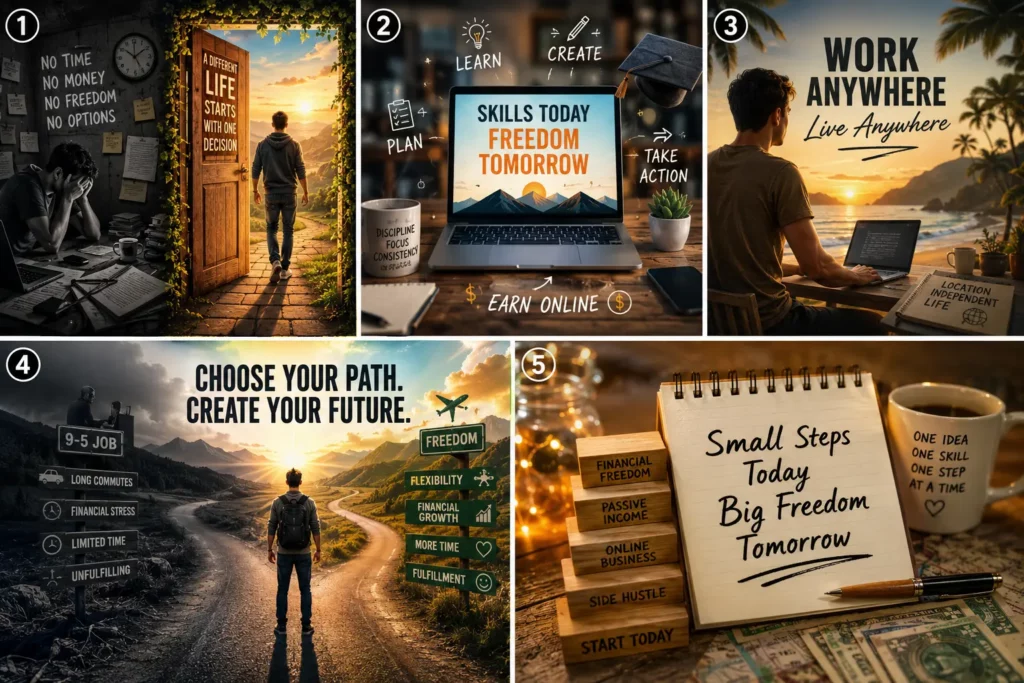
Ask for feedback.
Improve your skills.
That’s enough.
You don’t need to master online business in a few weeks.
You only need to become a little better than you were yesterday.
“How will I know I’m making progress?”
Progress doesn’t always appear as income.
Sometimes it looks like:
- Writing stronger proposals.
- Receiving more profile views.
- Finishing projects faster.
- Feeling less nervous speaking with clients.
- Getting your first positive review.
- Having a previous client return.
Those moments matter.
They’re often the signs that bigger opportunities are beginning to take shape.
The Questions That Matter Most
By now, you may have noticed something interesting.
The most important questions aren’t really about websites.
They’re about habits.
They’re about consistency.
They’re about learning.
They’re about believing that small improvements are worth making—even when no one else notices them yet.
Those are the habits that quietly separate people who dream about earning online from those who eventually build careers doing exactly that.
Coming Up Next
In Part 8, we’ll leave theory behind and build a practical 30-day action plan. You’ll know exactly what to do during your first month—from choosing your platform and creating a profile to finding your first opportunity, improving your skills, and building momentum without feeling overwhelmed.
Part 8: A 30-Day Action Plan to Start Earning Money Online
Information is useful.
Action is what changes your situation.
Many people spend weeks comparing platforms, reading reviews, watching tutorials, and waiting for the “perfect” moment to begin. They collect advice but never gain experience.
That’s where momentum quietly disappears.
The goal of this plan isn’t to help you master every website in a month.
It’s much simpler than that.
By the end of these four weeks, you should have:
- Chosen the right platform for your goals
- Created a professional profile
- Completed your first pieces of work
- Learned from real-world feedback
- Built habits that support long-term growth
Forget perfection.
Aim for progress.
Week 1: Build Your Foundation
Every successful online career starts with preparation.
The first week isn’t about earning as much money as possible.
It’s about putting yourself in a position where opportunities become easier to find.
Step 1: Choose One Platform
This is the hardest decision for many beginners.
Not because it’s complicated.
Because every opportunity looks exciting.
Resist the urge to sign up for everything.
Instead, choose one platform that matches your personality.
If you enjoy helping businesses, freelancing or virtual assistance may be the right fit.
If you’re creative, digital products or design might feel more natural.
If you’re simply curious about earning online, website testing or microtasks provide an easy introduction.
One focused effort almost always produces better results than ten scattered ones.
Step 2: Complete Your Profile
Think of your profile as your digital handshake.
It’s often the first impression a client, customer, or employer receives.
Take your time.
Use a professional photo.
Write a clear introduction.
Describe your strengths honestly.
List any relevant experience—even if it comes from personal projects, volunteering, education, or hobbies.
People aren’t looking for perfection.
They’re looking for someone they feel comfortable working with.
Step 3: Create Portfolio Samples
One question stops countless beginners:
“How can I show experience if no one has hired me yet?”
The answer is surprisingly simple.
Create your own examples.
If you’re a writer, publish sample articles.
If you’re a designer, create logos for imaginary companies.
If you’re interested in virtual assistance, organize spreadsheets or calendars as demonstrations.
If you’re a photographer, curate your strongest images into a small collection.
A portfolio doesn’t need paying clients.
It needs evidence that you can do the work.
Week One Checklist
Before moving forward, make sure you’ve completed the essentials.
- Choose one primary platform.
- Create your account.
- Finish your profile.
- Upload examples of your work.
- Learn how the platform operates.
- Read its payment and community guidelines.
A strong beginning saves countless hours later.
Week 2: Put Yourself in Front of Opportunities
The second week feels different.
Preparation gives way to action.
This is where many beginners become uncomfortable—and where real progress begins.
If You’re Freelancing
Submit thoughtful proposals every day or several times throughout the week.
Don’t copy and paste.
Instead:
- Mention the client’s goal.
- Explain how you’ll help.
- Keep your message concise.
- Write naturally.
- Proofread before sending.
A handful of strong applications usually outperform dozens of rushed ones.
If You’re Selling Digital Products
Publish your first listing.
Not your perfect listing.
Your first listing.
Waiting until everything feels flawless often leads to endless delays.
You can improve product images, descriptions, pricing, and keywords over time.
Nothing improves while sitting in draft mode.
If You’re Creating Content
Whether you’re writing articles, recording videos, or publishing tutorials, focus on solving one problem well.
Don’t worry about building a huge audience immediately.
Readers return because content is useful—not because the creator was already famous.
If You’re Completing Online Tasks
Develop consistency.
Instead of working randomly, create a routine.
Even thirty focused minutes each day is enough to build momentum.
Small routines are easier to maintain than ambitious schedules that quickly become exhausting.
Week Two Checklist
- Apply for projects consistently.
- Publish your first service or product.
- Complete available tasks carefully.
- Study successful profiles in your niche.
- Record what you’re learning.
The goal isn’t perfection.
It’s participation.
Week 3: Improve Instead of Starting Over
This is the week where many people make a costly mistake.
They assume slow progress means they’ve chosen the wrong platform.
In reality, they’re often just reaching the point where improvement begins.
Instead of switching websites, refine what you’ve already built.
Review Your Results
Ask yourself honest questions.
Which proposals received replies?
Which products attracted views?
Which tasks did you enjoy?
Where did you struggle?
Every answer contains useful information.
Treat early mistakes as research, not failure.
Develop One Valuable Skill
Choose a single area to improve.
For example:
- Writing
- Graphic design
- Typing speed
- Communication
- Search engine optimization
- Customer service
- Spreadsheet organization
- Video editing
Trying to improve everything at once usually leads to improving nothing.
One focused skill creates noticeable progress surprisingly quickly.
Ask for Feedback
Feedback can feel uncomfortable.
It can also save months of guessing.
Clients often provide insights you would never discover alone.
Listen carefully.
Look for patterns.
Then adjust.
Professionals improve because they learn from real work—not because they avoid criticism.
Week Three Checklist
- Review completed work.
- Improve one important skill.
- Update your profile if necessary.
- Organize your files and workflow.
- Learn from client comments or marketplace feedback.
Growth is often invisible while it’s happening.
Keep going.
Week 4: Build Habits That Last
The final week isn’t about working harder.
It’s about working more intentionally.
At this point, you’ve learned enough to begin creating systems instead of relying on motivation alone.
Increase What Works
Notice what has produced results.
If one proposal style receives replies, continue refining it.
If one type of product attracts attention, create another.
If certain tasks match your strengths, spend more time there.
Success leaves clues.
Pay attention to them.
Track Simple Numbers
You don’t need complicated spreadsheets.
Monitor a few useful metrics.
For example:
- Applications submitted
- Projects completed
- Articles published
- Products listed
- Reviews received
- Earnings
- Repeat clients
Tracking progress makes improvement easier to see.
It also keeps emotions from influencing every decision.
Build Relationships
One satisfied client is often more valuable than ten new prospects.
Respond promptly.
Meet deadlines.
Communicate clearly.
Say thank you.
People remember how you made working with you feel.
Professional relationships often become your greatest source of future opportunities.
Week Four Checklist
- Increase your activity gradually.
- Track meaningful progress.
- Strengthen client communication.
- Continue improving your portfolio.
- Set realistic goals for next month.
Momentum grows when small actions become consistent habits.
A Beginner’s Success Checklist
Before expanding into additional platforms, ask yourself:
- Have I completed my profile?
- Have I submitted consistent applications?
- Have I improved one skill?
- Have I earned useful feedback?
- Have I created examples of my work?
- Have I developed a weekly routine?
- Do I understand how my chosen platform works?
If the answer is yes to most of these questions, you’re moving in the right direction.
How to Stay Motivated When Results Feel Slow
This stage surprises almost everyone.
You put in effort.
You improve your profile.
You submit proposals.
And yet, the results don’t always arrive immediately.
That’s normal.
Think about planting a tree.
You don’t see growth every day.
But beneath the surface, roots are developing.
Online work often follows the same pattern.
You’re building:
- Experience
- Confidence
- Better communication
- Stronger skills
- Professional habits
- A growing portfolio
Those foundations eventually support larger opportunities.
Stay patient.
Progress often arrives quietly before it becomes obvious.
Small Wins Matter More Than You Think
Don’t underestimate achievements like these:
- Sending your first proposal.
- Publishing your first product.
- Receiving your first reply.
- Completing your first project.
- Getting your first review.
- Receiving your first payment.
They’re easy to overlook because they seem small.
They’re actually milestones.
Every experienced freelancer, creator, consultant, and entrepreneur has celebrated those exact moments.
The only difference is that theirs happened earlier.
Now it’s your turn.
Choosing Your Next Step
At the end of your first month, you’ll probably feel tempted to explore every new opportunity you discover.
Instead, pause.
Ask yourself:
“What’s already working?”
Build on that answer.
Success online rarely comes from constantly starting over.
It comes from improving what already shows promise.
That’s how confidence grows.
That’s how skills compound.
And that’s how small beginnings gradually become something much bigger.
Coming Up Next
In Part 9, we’ll strengthen everything you’ve learned with publishing assets designed for long-term value. You’ll find expanded FAQs that answer real search questions, internal linking recommendations, topical authority ideas, and search-optimized metadata that help turn this guide into a comprehensive resource for readers and search engines alike.
Part 9: Publishing Assets That Make This Guide More Useful
A great article doesn’t stop after answering the main question.
It anticipates the next one.
Readers rarely visit a guide like this with a single concern. They arrive wondering how to make money online, but along the way they begin asking new questions.
Which website should I trust?
How do I avoid scams?
Should I freelance or sell digital products?
Can I do this alongside my current job?
The strongest resources don’t force people to leave in search of those answers.
They provide them.
This section is designed to make this guide more complete—for readers first, and for search engines as a natural result.
Quick Reference Guide
If you’ve skimmed the article and want a fast recommendation, start here.
Best Websites for Complete Beginners
These platforms have a gentle learning curve and don’t require an extensive portfolio to begin.
- Swagbucks
- UserTesting
- Clickworker
- Amazon Mechanical Turk
They’re well suited to anyone who wants to understand how online work functions before moving into more advanced opportunities.
Recommended reading: Best Websites to Make Money for Retirees: A 30-Day Plan for Building Flexible Online Income
Best Freelance Platforms
If your goal is to build a professional service business, these marketplaces deserve your attention.
- Upwork
- Fiverr
- PeoplePerHour
They reward consistency, communication, and quality work. Over time, positive reviews can become one of your strongest competitive advantages.
Best Platforms for Remote Careers
If you’d rather work with employers than individual clients, these options are worth exploring.
- FlexJobs
- Belay
Both focus on flexible, remote opportunities that can grow into long-term professional roles.
Best Platforms for Building Passive Income
Creating an asset today can produce results long after the work is finished.
These platforms support that approach.
- Etsy
- Teachable
- Shutterstock Contributor
- PartnerStack
While they require effort upfront, they also offer some of the strongest long-term earning potential.
Best Choices for Creative People
If creating things energizes you, these platforms naturally align with those strengths.
- Etsy
- Medium
- Fiverr
- Shutterstock Contributor
Writing, design, photography, and digital products often reinforce one another, making it easier to expand into multiple income streams over time.
Questions Readers Often Ask Next
After learning about legitimate websites, people usually begin thinking beyond the platforms themselves.
These are some of the next questions worth exploring.
Which online skills are worth learning first?
Communication, writing, graphic design, virtual assistance, customer support, spreadsheet management, digital marketing, and search engine optimization remain valuable because they’re useful across many industries.
Rather than learning a little about everything, choose one skill and become genuinely good at it.
Is freelancing better than remote employment?
Neither option is universally better.
Freelancing offers flexibility, control, and unlimited earning potential, but it also requires finding clients and managing your own workload.
Remote employment often provides greater stability and predictable income while offering less flexibility.
Your personality and goals matter just as much as the platform you choose.
Should you build one income stream or several?
Eventually, several.
Initially, one.
Building multiple income streams works best when each new opportunity grows naturally from an existing one.
A writer might begin freelancing, then publish articles, create templates, and later recommend useful software.
Each step supports the next instead of competing for attention.
What’s the biggest factor in long-term success?
Reliability.
Skills matter.
Experience matters.
But reliability quietly influences almost everything else.
Clients remember the freelancer who met every deadline.
Students return to the tutor who encouraged them.
Readers subscribe to writers who consistently publish helpful content.
Trust compounds just as skills do.
Articles That Naturally Belong Alongside This Guide
If you’re building a website around online income, this article works best as the cornerstone of a larger content hub.
Supporting topics could include:
Freelancing
- How to Get Your First Freelance Client
- How to Write Proposals That Get Responses
- Freelance Portfolio Tips for Beginners
- Freelance Pricing Mistakes to Avoid
Remote Work
- How to Prepare for Your First Remote Job Interview
- Productivity Tips for Working from Home
- Remote Communication Skills Every Professional Needs
- Home Office Essentials on a Budget
Digital Products
- Beginner’s Guide to Selling Printables
- Digital Product Ideas That Solve Everyday Problems
- How to Price Digital Downloads
- Common Mistakes New Sellers Make
Content Creation
- How to Start Writing Online
- Evergreen Content Ideas That Continue Attracting Readers
- How to Build an Audience Organically
- Writing Habits That Improve Every Article
Online Business
- How to Build Multiple Income Streams
- Time Management for Freelancers
- Creating a Weekly Work Routine
- Setting Realistic Financial Goals
Each supporting article strengthens the others, making your content more useful while naturally expanding topical coverage.
Signs You’re Ready to Move Forward
You don’t need years of experience before taking the next step.
You simply need evidence that you’re progressing.
You’re probably ready to expand when:
- Clients begin returning.
- Your confidence has noticeably improved.
- You complete work more efficiently.
- You understand your chosen platform well.
- You’re developing a clear specialty.
- You’re thinking less about finding work and more about delivering excellent results.
Growth often feels gradual while it’s happening.
Looking back, it usually seems obvious.
Publishing Checklist
Before considering this guide complete, review these elements.
Accuracy
Confirm that platform information, features, and payment details remain current.
Readability
Break up long sections with descriptive headings, tables, and short paragraphs.
Readers should be able to scan the guide without losing context.
Visual Content
Support the article with relevant images such as:
- Freelancers working from home
- Online tutoring sessions
- Digital product examples
- Workspace setups
- Website dashboards
- Productivity tools
Visuals help readers imagine themselves taking the next step.
Reader Experience
Ask yourself one final question before publishing:
“If I were completely new to earning money online, would this article answer the questions I’d be too nervous to ask?”
If the answer is yes, you’ve created something genuinely valuable.
Coming Up Next
The final part replaces the traditional conclusion with a practical Products / Tools / Resources section. Instead of ending the conversation, you’ll discover useful tools, software, learning resources, and services that can help you take the next step—whether you’re freelancing, creating digital products, teaching online, or building your first online business.
Part 10: Products / Tools / Resources
Reading about online income is a great first step.
Building it is a series of small, consistent actions.
The tools below aren’t requirements. You don’t need to purchase everything before getting started. In fact, many successful freelancers begin with nothing more than a computer, an internet connection, and a willingness to learn.
As your skills grow, however, the right tools can help you work faster, stay organized, and deliver a better experience to clients and customers.
Think of them as investments in your efficiency—not shortcuts to success.
Essential Productivity Tools
A productive workflow saves more time than working longer hours.
Useful tools include:
Project Management
Ideal for organizing client work, deadlines, and personal projects.
Helpful for:
- Freelancers
- Virtual assistants
- Content creators
- Small business owners
Cloud Storage
Keeping important files backed up protects your work and makes collaboration much easier.
Use cloud storage to organize:
- Client documents
- Contracts
- Portfolio files
- Course materials
- Digital products
Note-Taking Apps
Ideas often arrive unexpectedly.
A reliable note-taking app makes it easy to save:
- Content ideas
- Client requests
- Research
- Checklists
- Business plans
Small ideas collected consistently often become your best projects later.
Writing & Content Creation Resources
Whether you’re freelancing, blogging, or creating digital products, clear communication is one of your greatest assets.
Useful resources include:
Grammar & Proofreading Tools
Before submitting work, review it carefully.
Look for:
- Spelling errors
- Grammar issues
- Awkward wording
- Repeated phrases
- Formatting inconsistencies
Professional writing builds trust.
Keyword Research Tools
If you plan to write articles, build a blog, or sell digital products, learning what people search for can help you create content that answers real questions.
Look for tools that help identify:
- Search intent
- Long-tail keywords
- Topic ideas
- Frequently asked questions
- Content gaps
The goal isn’t simply to attract visitors.
It’s to solve the problems they’re already trying to solve.
Design Resources
Good design doesn’t have to be complicated.
Even simple visual improvements can make your work appear more professional.
Useful resources include:
- Presentation templates
- Social media graphics
- Resume layouts
- Brand color palettes
- Icon libraries
- Mockup generators
Remember:
Clear, clean design almost always outperforms clutter.
Learning Resources
The online economy rewards people who keep learning.
Instead of trying to master everything, focus on one valuable skill at a time.
Areas worth exploring include:
Writing
Strong writing improves:
- Freelancing
- Blogging
- Email marketing
- Product descriptions
- Client communication
Graphic Design
Basic design knowledge supports:
- Social media management
- Digital products
- Branding
- Marketing materials
- Freelance services
Search Engine Optimization
Understanding how people search online helps with:
- Blogging
- Affiliate marketing
- Digital products
- Freelancing
- Business websites
Even a basic understanding of search intent can make your content significantly more useful.
Digital Marketing
Learning how businesses attract customers opens doors to many online careers.
Topics include:
- Email marketing
- Content marketing
- Social media
- Conversion optimization
- Audience building
These skills remain valuable across almost every industry.
Equipment That Can Improve Your Workflow
You don’t need an expensive office.
Start with what you have.
As your income grows, consider upgrading gradually.
Helpful additions include:
Comfortable Keyboard
Especially useful for:
- Writers
- Transcriptionists
- Virtual assistants
- Data entry professionals
Quality Headset
Ideal for:
- Online tutoring
- Client meetings
- Customer support
- Virtual assistance
Clear audio creates a more professional experience.
External Monitor
Extra screen space can make multitasking much easier, particularly when researching, writing, designing, or managing multiple projects.
Reliable Webcam
If you regularly meet clients or teach online, good video quality helps create a stronger first impression.
Books Worth Reading
One of the fastest ways to improve is by learning from people who’ve already built successful careers.
Look for books covering topics such as:
- Personal finance
- Freelancing
- Productivity
- Marketing
- Entrepreneurship
- Communication
- Negotiation
- Habit formation
- Time management
A single useful idea applied consistently can have a greater impact than reading dozens of books without taking action.
Skills That Continue Paying You Back
Some investments appreciate over time.
Skills work the same way.
The more you develop them, the more opportunities they create.
Focus on strengthening:
- Communication
- Writing
- Organization
- Critical thinking
- Research
- Problem-solving
- Customer service
- Digital literacy
- Adaptability
Unlike software or platforms, these abilities stay with you throughout your career.
Build Your Own Personal Toolkit
As you gain experience, create a toolkit that supports the type of work you enjoy most.
For example:
Freelancers
- Proposal templates
- Portfolio
- Client onboarding checklist
- Time tracking system
- Invoice template
Writers
- Content calendar
- Research workflow
- Style guide
- Editing checklist
- Keyword research process
Designers
- Brand assets
- Font library
- Color palettes
- Portfolio website
- Client questionnaire
Virtual Assistants
- Calendar templates
- Task management system
- Communication templates
- Standard operating procedures
- Productivity checklist
The more repeatable your workflow becomes, the easier it is to deliver consistent, high-quality work.
Your Next Step
By now, you don’t need another list of websites.
You need a starting point.
Choose the platform that fits your goals.
Create your profile.
Learn how it works.
Complete your first piece of work.
Then do it again.
Progress online rarely arrives in dramatic leaps.
It grows through steady improvement, thoughtful decisions, and a willingness to keep learning.
Months from now, you’ll almost certainly know more than you do today.
You’ll work faster.
Communicate more confidently.
Recognize better opportunities.
And you’ll probably look back at your first project with a smile, realizing just how far you’ve come.
Every online career starts with a single action.
The only question left is:
Which website will you start with today?