
Maybe you picture it late in the evening: the house has settled, the day is finally quiet, and one page on your website is still helping someone you will never meet. It answers a question. It points toward a useful next step. The work you did earlier is still doing something.
That is the attractive part of passive income from a website. The less glamorous part is easy to miss: those pages, tools, and downloads need an owner. Information gets old. Links break. Visitors ask new questions.
A website can become a useful asset, but for most people the honest phrase is semi-passive income—work concentrated up front, with maintenance and improvement continuing in smaller, sometimes uneven bursts.
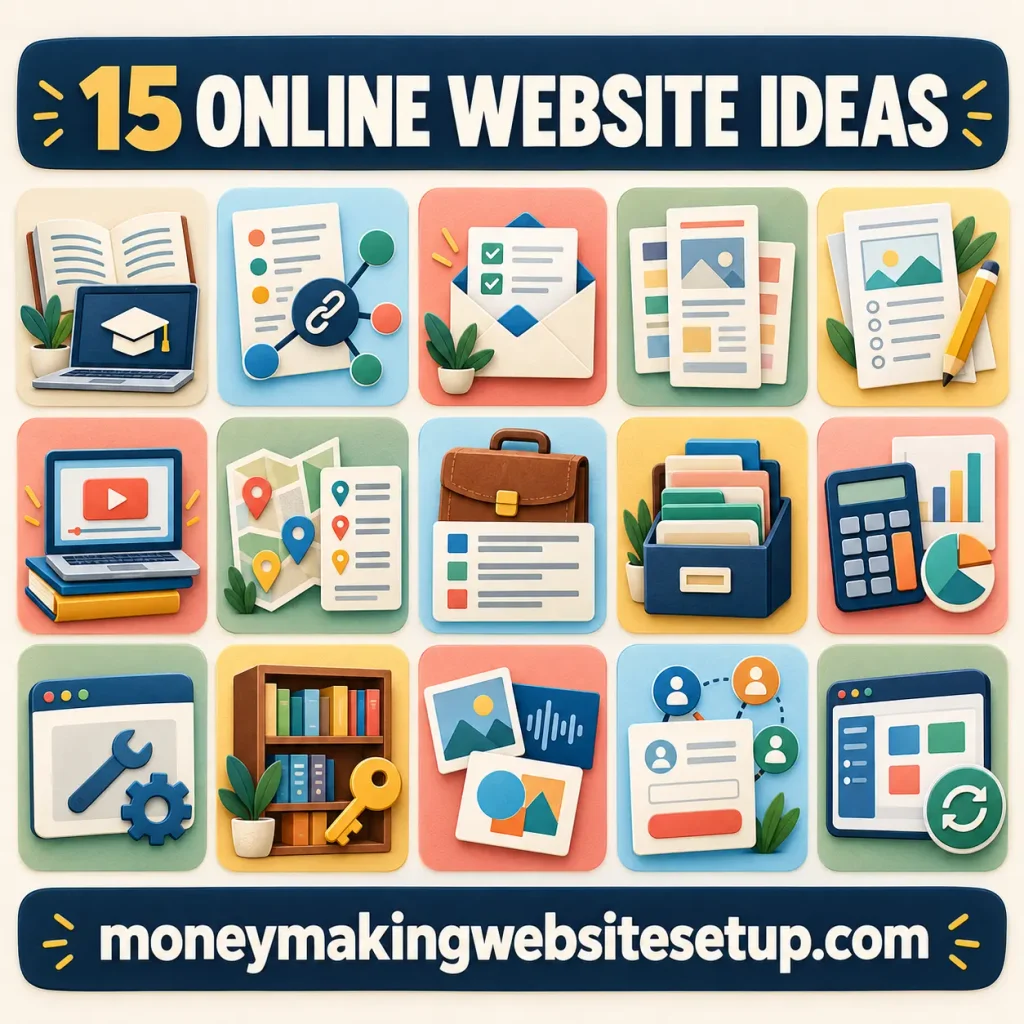
If you are looking for website ideas that generate passive income, the choice is not just “Which one could make money?” It is also “What would I have to create, and can I live with the work that follows?” Here are fifteen online models, with the build effort and upkeep beside each one.
The short answer: which website ideas can keep earning after launch?
A website may create semi-passive income when it offers something useful that can serve many people: educational content, tutorials, email resources, templates, printables, courses, directories, job listings, a database, a calculator, a browser-based tool, a membership library, licensed digital assets, qualified leads, or subscription software. The model still needs a way to reach the right audience, a revenue path that makes sense, and someone to keep the experience accurate and working. No website idea guarantees income.
What “passive” looks like when a website is involved
A site does not earn simply because it exists. It needs a real audience, an asset worth finding, and a sensible way to support the work financially.
Sometimes the asset is a guide that explains a confusing process. Sometimes it is a template that saves someone half an hour. It might be a directory that makes scattered information easier to compare, or a simple tool that returns a useful answer.
Once created, the same asset can help more than one person. That is the leverage.
The route from idea to income has a few connected parts. First comes the audience and the problem. Then the asset that solves part of it. People need a way to discover that asset, through search, referrals, email, or another channel. If a relevant revenue path exists—advertising, affiliate referrals, digital products, paid listings, subscriptions, licensing, or leads—the site may be able to support itself.
There is no need to assemble every piece on the first day. A beginner can start with one audience, one useful asset, and one reasonable way to test whether the idea matters to anyone else.
Fifteen website models, and the work hiding behind each one
The effort labels below are relative to a small, beginner-scale version of each model. “Low” still means work; a custom design, more features, or a larger catalog can change the picture.
A focused educational website
Think of a small shelf of clear answers for one kind of reader, not an encyclopedia trying to cover everything. A site could help new online business owners plan their first pages, understand an email list, and connect useful content to an offer.
How it can earn: Advertising, carefully chosen affiliate referrals, sponsorships, or original digital resources.
Build effort: Medium, because the site needs a coherent topic and a useful group of guides.
Maintenance: Medium; examples, policies, and links can age.
The important work happens in the topic choice. Five connected pages that help the same audience are a stronger beginning than twenty articles that happen to share a broad keyword.
An affiliate tutorial resource hub
This kind of site walks readers through a task and explains which tools or services might help along the way. A tutorial might show how to add an email opt-in to a website, for example, then mention a suitable service if it fits the reader’s situation.
How it can earn: A disclosed affiliate link may produce a commission when a reader completes a qualifying action.
Build effort: Medium.
Maintenance: Medium to high, because links, terms, features, and offers can change.
The tutorial has to stand on its own. A reader should leave knowing more even if they never click a recommendation. That is how a resource stays useful instead of becoming a sales page wearing a guide’s clothes.
An email-first resource website
Here, the website is the front door to a useful email relationship. It hosts a small library of guides, offers a relevant free resource, and helps interested readers continue learning through a newsletter or welcome sequence.
How it can earn: A relevant affiliate offer, a sponsor, or an original digital product may fit once the audience’s needs are clear.
Build effort: Low to medium for a modest guide library and one lead magnet.
Maintenance: Medium; emails, links, and delivery need occasional testing, and the list needs useful follow-up.
For a beginner, this can be a quieter way to build trust. One helpful page can meet a reader at the moment they have a question; a useful email can pick up the conversation later, with permission.
Learn more: How to Build an Email List for Affiliate Marketing That Actually Buys: The Conversion-First Funnel
A digital template library
Templates help people complete familiar tasks with less starting-from-zero effort. They might be checklists, planning sheets, content calendars, budget trackers, or simple process documents.
How it can earn: Sell a single download or a focused bundle, or offer a small free template that introduces a larger resource.
Build effort: Low to medium for an original starter collection.
Maintenance: Low to medium; instructions, file formats, and examples need updating when the underlying task changes.
Start with one repeated frustration. A clear, practical template for that problem will teach you more than a large bundle built on a guess.
A printable learning-resource website
This site gathers printable or downloadable materials around one subject, age group, or skill. The resources might be practice sheets, lesson aids, planners, or guided exercises.
How it can earn: Paid resource packs, advertising, memberships, or licensing for permitted uses.
Build effort: Medium, since the materials need to be original and easy to use.
Maintenance: Low to medium, with more work if the material depends on changing curricula, standards, or formats.
Readers should be able to see who a resource is for and how to use it before they download it. A few plain instructions can prevent confusion later.
A focused online course
A course turns a multi-step process into a learning path, with lessons, exercises, and supporting materials. The strongest version usually teaches one defined outcome instead of promising to teach an entire field.
How it can earn: Course sales or access through a learning platform.
Build effort: High; you need to plan lessons, record or write them, arrange delivery, and decide how to handle learner questions.
Maintenance: Medium to high as tools, links, and instructions change.
A course makes sense when people repeatedly need help through the same sequence. If you are still learning what they need, begin with a guide or template and listen before building the full curriculum.
A niche directory
Directories make it easier to find relevant services, organizations, resources, or tools in one focused area. The useful part is not the number of entries; it is the time and uncertainty the directory removes for the visitor.
How it can earn: Paid listings, sponsorships, or qualified introductions, with the commercial arrangement made clear.
Build effort: Medium to high.
Maintenance: High, because listings close, websites move, and details become inaccurate.
A short list of carefully checked options can be more valuable than a sprawling directory nobody trusts. Start narrow enough that you can keep the information dependable.
Recommended guide: How to Make Money With a Directory Website: 10 Revenue Models, a 90-Day Launch Plan, and the Path to Recurring Income
A niche job board
A job board brings employers and job seekers together around a particular profession, location, skill, or work arrangement. A focused remote-work board, for instance, could serve one professional group better than a general listing site.
How it can earn: Employers may pay to post a role, feature a listing, or reach a relevant audience.
Build effort: High; the board needs enough legitimate openings to be worth checking.
Maintenance: High, since filled or misleading posts need to come down and employer details need to stay accurate.
The website itself may be straightforward. The harder part is building confidence on both sides: job seekers want real opportunities, and employers want the right applicants.
Recommended guide: How to Make Money With a Job Board Website Without Massive Traffic: The Small-Niche Employer-Pay Strategy
A curated information database
A database organizes information that is otherwise difficult to compare or search. Depending on the audience, it could cover training programs, grants, software integrations, or a carefully selected set of niche resources.
How it can earn: Subscriptions, clearly identified sponsored entries, licensing, or referrals may make sense if the database saves users meaningful research time.
Build effort: High, because the records need a consistent structure.
Maintenance: Medium to high; important details need verification, and readers should know when they were last checked.
Before building, be precise about the decision the database helps someone make. If a regular search already solves the problem well, you need a more useful lens or a better-organized source.
A calculator or estimator website
A calculator turns a visitor’s inputs into an estimate, comparison, or planning result. It might help someone estimate startup costs, compare two approaches, or plan how much time a project could take.
How it can earn: Advertising, relevant referrals, sponsorships, or a paid version with additional features.
Build effort: Medium to high, depending on the formulas and interface.
Maintenance: Medium to high; assumptions and calculations need checking when circumstances change.
Show people how the result was calculated and what it leaves out. A useful estimate is a starting point for a decision, not a promise about what will happen.
A simple browser-based utility
Some websites solve a small task directly in the browser: formatting text, generating a checklist, or organizing information. When people need the task more than once, a well-made utility can give them a reason to return.
How it can earn: Advertising, a premium version, sponsorship, or a relevant product or referral.
Build effort: Medium to high.
Maintenance: Medium to high, since the tool needs to work across devices and browsers and handle user data carefully.
Keep the first version small. One reliable feature that removes a real annoyance is easier to explain and care for than a bundle of half-finished tools.
A paid membership resource library
Members pay for continuing access to a collection of resources, lessons, templates, or tools. The promise should be concrete: what people receive, who it is for, and how often the material changes.
How it can earn: Recurring membership fees.
Build effort: High, because you need a useful collection, access controls, billing, and a plan for ongoing value.
Maintenance: High. Members expect updates, reliable access, and support.
Recurring revenue is not the same thing as passive income. A membership can be a good model when the promise is sustainable for its owner and genuinely useful to its members.
Recommended guide: How to Make Money With a Membership Website From Scratch: Build, Launch, and Grow Your First Paid Community
A licensed digital-asset library
Photographers, designers, illustrators, and other creators can make a website around original assets people license for specific uses. The library might contain icons, photos, audio, or design elements.
How it can earn: Individual licenses, bundles, or a subscription to a defined collection.
Build effort: Medium to high; the catalog needs quality, useful metadata, and clear licensing terms.
Maintenance: Medium, for adding and organizing assets, clarifying rights, and keeping delivery working.
Ownership matters here. Offer only material you have the right to license, and explain the permitted uses plainly.
Recommended reading: The $1K/Month Website Blueprint: How Ordinary People Build Digital Assets That Pay Them While They Sleep
A lead-generation website
A lead-generation site helps people find a particular service and connects them with providers. An online-focused example might serve people looking for virtual bookkeeping, editing, or website support.
How it can earn: A provider may pay for a qualified inquiry or an agreed referral arrangement.
Build effort: High; you need relevant visitors, a clear request process, and suitable providers.
Maintenance: High, because provider quality, privacy, and referral expectations need attention.
Be specific about what happens after someone sends their details. The visitor should understand who will contact them and what the site can—and cannot—promise.
Learn more: Free Lead Generation Website Setup: The Exact System That Turns a New Website Into a Lead-Capturing Machine
A small subscription software website
A micro-SaaS site offers a focused tool that solves a recurring problem for a narrow audience. It might support scheduling, reporting, or a particular workflow.
How it can earn: Monthly or annual subscriptions, sometimes with a limited free version.
Build effort: Very high unless you can test a simple version with existing tools first.
Maintenance: Very high; people expect working software, security, fixes, and support.
It can become a valuable digital asset, but it is usually not the simplest place to begin. Test the problem and the willingness to pay before putting months into custom development.
Which idea fits the time and skills you actually have?
The best model on paper may not fit a week already divided between family, work, and everything else. That is why the maintenance column deserves as much attention as the revenue path.
If you enjoy writing and research, a focused educational site, tutorial hub, or email resource website may feel natural. If you like arranging information, consider a directory or database. If you make useful materials, templates, printables, or a course might suit you. If you enjoy solving technical problems, explore a calculator or browser utility—but be honest about the support and testing they require.
A simple question can bring the choice into focus: Can I make the first useful version of this, and will I still be willing to care for it six months later? If the honest answer is no, that does not make the idea bad. It may mean the scope needs to be smaller.
Let the first version teach you what to build next
Before choosing a domain or paying for extra tools, describe the idea in one sentence: “This site helps [audience] do [task] without [obstacle].” If the sentence is vague, the website probably needs a narrower audience or a clearer problem.
Then look at what those people already ask, search for, or struggle to compare. Notice what current resources explain well and where a reader might still be left unsure. Build one useful thing in that gap—a guide, template, small directory, or working tool—and put it in front of a few people who fit the audience.
Their questions are part of the research. If they ask how to take the next step, that may become the next page. If they misunderstand the offer, the explanation needs work. If the idea gets no response, learn from that before building a bigger version.
A website about one problem can grow into a cluster of connected pages. A directory can expand when visitors need another category. A tool can gain a second feature after the first proves useful. Growth becomes easier to steer when the first asset gives you evidence.
The website still needs a little care after launch
Maintenance rarely arrives as one dramatic task. It is the quiet check that keeps the site from drifting out of date.
Content and links
Refresh instructions, examples, and links when they stop matching what readers will find today. Add information when real questions show that an important step is missing.
Offers and disclosures
Check that a referral offer still exists, that its terms remain accurate, and that the link is clearly disclosed. A recommendation should help a reader decide whether the offer fits—not just push them toward it.
Email and delivery
Test the opt-in, confirmation, download, and welcome messages. A resource that never arrives breaks trust before the relationship has a chance to begin.
Learn more: How to Build an Email List and Make Money With Fewer Than 1,000 Subscribers
Technology and performance
Keep backups, security updates, forms, and mobile pages in working order. Look at which pages attract relevant visitors and what questions those visitors bring. That information can guide your next improvement.
The goal is not to keep changing a website for the sake of looking busy. It is to keep the useful parts useful.
The questions people ask before they start
“Which website idea would be easiest for me to start?”
Look for the model whose first useful asset you can make with skills you already have. A focused guide library, a small template collection, or an email resource site may be manageable if you understand the audience’s problem. The best starting point depends on your strengths and the upkeep you can take on.
Recommended reading: 21 Easy Websites to Create and Monetize (Even If You’ve Never Built a Website Before)
“Can a website really bring in passive income?”
It can earn from digital assets that keep attracting visitors or delivering value after publication. Most websites still need updates, audience care, technical maintenance, or support. Semi-passive is usually the more realistic expectation.
Recommended guide: Best Passive Income Websites to Run From Home With Little Money: 7 Beginner-Friendly Models That Can Keep Earning After Setup
“When could a website start making money?”
There is no reliable timetable. It depends on the audience, the usefulness of the offer, how people discover the site, the competition, and the work invested. Early interest can help you improve the idea, but it cannot promise later earnings.
Recommended guide: How Long Does It Take to Make Money From a Website? The Fastest Realistic Path to Your First $100
“Do I have to write blog posts to earn from a website?”
No. A site can be built around content, directory, calculator, downloadable resource, database, course, or software tool. It still needs a way to reach the right people and a clear reason for them to use it.
Recommended reading: How to Make Money With a Website Without Blogging: Build a Simple One-Offer Funnel That Can Sell 24/7
“Which model asks for the least maintenance?”
Some downloads need fewer updates than a job board, membership, or software service. Even a simple product needs occasional attention to accuracy, delivery, and customer questions. Think about the upkeep before you choose.
“What should I make first?”
Make the smallest useful version that lets you test the idea. That might be one strong guide, a few verified directory entries, a working calculator, or a single well-made download. Let what you learn shape the next step.
Products / Tools / Resources
Products
A guided website setup program can help a beginner who would rather follow a clear sequence than piece together every step alone. Plug-In Profit Site is one option to consider. Check its current details and any optional upgrades before deciding; a setup program cannot guarantee income, and the site still needs a useful audience, relevant content, and consistent work. If this is linked through an affiliate relationship, make that disclosure easy to see.
A small digital resource can also be a first product. A checklist, website map, or planning worksheet is manageable to create and gives readers something practical to use right away. Build it around one task people already want to complete.
Tools
For a straightforward website foundation, WordPress with a lightweight theme such as GeneratePress can support an article library without making the site harder to manage than it needs to be. A custom domain and reliable hosting provide the basic home for the content.
Google Search Console can show which queries lead people to the site and which pages are appearing in search. A permission-based email platform with confirmation and automated welcome messages can deliver a free resource and follow up with readers who ask to hear from you.
Google Docs or Word can be enough to create an early checklist or guide. Canva can help lay it out as a PDF. Start with the tools that solve the task in front of you; add more only when a real need appears.
Resources
The free 24-Hour Money-Making Website Blueprint walks through the pieces that turn an idea into an online home: audience, core pages, content path, opt-in resource, and follow-up emails. It is a natural starting point when an idea needs a website of its own.
A skill-to-offer worksheet can help connect what you know with a problem people want solved. A basic portfolio or proof folder can collect examples, explanations, and original work as the site grows.