
Most people rush through the moment.
They open a registrar, type something that sounds “good enough,” click buy—and move on, eager to get to the real work.
Content. Traffic. Monetization.
But quietly—almost invisibly—the trajectory has already been set.
Because a domain name isn’t just a starting point.
It’s a force multiplier. Or a silent drag.
And over time, that difference compounds in ways most people never trace back to the source.
The Domain You Choose Is Already Working (Whether You Notice or Not)
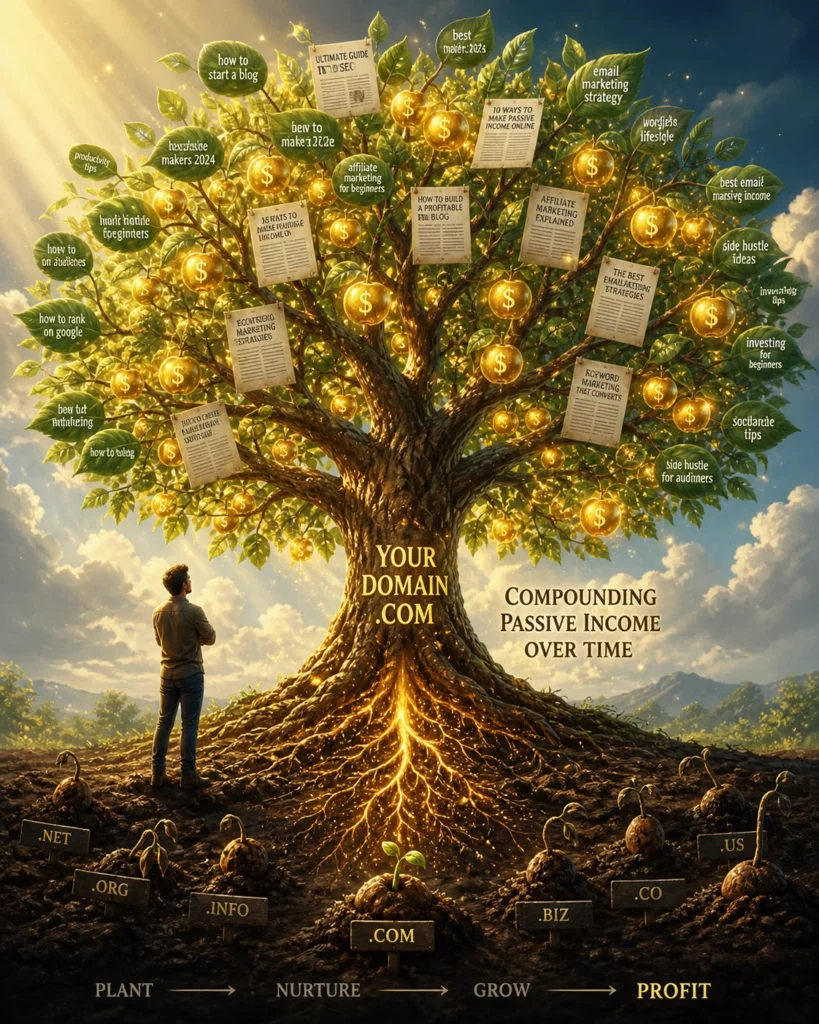
There’s a subtle shift that happens when you stop seeing a domain as a name… and start seeing it as an asset.
Not a loud one. Not something flashy.
Something quieter.
Something that shapes how search engines interpret you, how users feel about you, and how easily your content finds its place in an already crowded landscape.
A strong domain doesn’t announce itself. It simply removes friction—again and again—until growth starts to feel almost unfair.
Why Domain Names Quietly Shape Rankings and Revenue
Search engines don’t think in keywords anymore—not in the way they used to.
They think in context, in relationships, in meaning.
And your domain sits right at the edge of that understanding.
When a Name Instantly Makes Sense
Imagine landing on a site called:
- “UrbanGardenTools.com”
versus - “Zentariq.com”
One tells you exactly where you are. The other asks you to figure it out.
Search engines face the same choice.
The clearer the signal, the less work required to understand your content—and the faster your pages begin to align with relevant queries.
The Split-Second Judgment Users Make
Before anyone reads a word, something else happens.
A glance at the URL.
A quick internal check:
- Does this feel legit?
- Does it match what I was looking for?
- Would I trust this advice?
You don’t see that moment, but you feel its consequences.
Higher clicks. Lower bounce. Longer time on page.
And over time, those signals feed right back into rankings.
How Authority Builds—Or Stalls
Some sites feel like they grow as a whole.
Every article strengthens the next. Every page seems connected.
Others feel scattered. Disconnected. Like each post is starting from zero.
The difference often traces back to the domain.
When your domain aligns tightly with a topic, it becomes a kind of anchor.
Everything you publish pulls in the same direction.
That’s where compounding begins.
The Domain Structures That Actually Generate Passive Income
Not all domains are built for growth. Some are designed—intentionally or not—to plateau.
Others are built to scale.
The Direct, Keyword-Aligned Domain
There’s a certain blunt power in clarity.
Something like:
“BestRunningShoesGuide.com”
No mystery. No ambiguity.
It tells both users and search engines exactly what to expect.
These domains often gain traction faster—especially in competitive niches—because they reduce interpretation entirely.
But they can feel… replaceable.
The Brand That Carries Weight
Then there are names that don’t explain themselves right away.
“StrideLab.com.”
“TrailForge.com.”
They take a little longer to build meaning—but when they do, they carry authority in a different way.
They feel intentional. Memorable. Owned.
The tradeoff is time.
Where the Two Worlds Meet
The most interesting domains live somewhere in between.
They hint at the topic without locking themselves into it.
“RunnerTechLab.com.”
“SmartTrailGear.com.”
These names create immediate relevance while leaving room to grow.
They tend to age better—and scale further.
The Shortcut: Expired Domains
Some domains come with history.
Backlinks. Mentions. Residual authority.
Used carefully, they can accelerate growth in ways that feel almost disproportionate to effort.
But they require scrutiny. Not all history is helpful.
The Laser-Focused Micro-Niche
And then there are domains built for precision.
“BestStandingDeskForTallPeople.com”
They don’t try to be everything. They try to win one space—completely.
These often rank quickly and convert well… but they don’t always expand easily.
Choosing a Domain Through a Semantic Lens
Picking a domain without context is like naming a book before you know the story.
So instead, step back.
Look at the ecosystem.
Start With the Topic Web
Every niche isn’t just a topic—it’s a network.
Take something simple like coffee:
- Brewing methods
- Equipment
- Maintenance
- Reviews
- Comparisons
Your domain should feel like the center of that web—not an isolated thread.
Notice What Always Appears Together
Certain phrases travel in packs.
“Espresso” rarely appears without “pressure” or “extraction.”
“Grinder” often pairs with “burr vs blade.”
These patterns aren’t random. They signal how topics are understood.
A domain that echoes this ecosystem feels more native to search engines.
Follow the Intent Spectrum
Behind every search, there’s a different kind of intent.
- Someone learning
- Someone comparing
- Someone ready to buy
A domain that only serves one layer limits itself.
The stronger domains stretch across all three—naturally.
Before You Buy: The Quiet Checks That Matter
This is where most mistakes happen.
Not in creativity—but in validation.
Is There Room to Win?
High search volume means nothing if every result is untouchable.
Look for cracks:
- Forums ranking
- Thin content
- Low-authority sites holding top spots
That’s where opportunity lives.
Is There Money in the Space?
Traffic alone doesn’t pay.
Look for signals:
- Affiliate programs
- Ads competing for placement
- Products people actually buy
If there’s no commercial layer, growth stalls—no matter how much traffic you build.
Can You Keep Going?
Some ideas sound great… until you run out of content after 15 articles.
A strong domain supports depth.
Not just a handful of posts—but an ecosystem that keeps expanding.
Matching Your Domain to How You’ll Earn
Traffic is only half the equation.
What matters is what that traffic does.
When You’re Selling Through Content
Affiliate-focused sites thrive on intent.
People searching for:
- “best”
- “top”
- “review”
Your domain should feel aligned with decision-making.
When Volume Is the Game
Ad-driven sites need breadth.
More topics. More pages. More entry points.
Here, flexibility matters more than precision.
When Trust Is Everything
Lead generation sits in a different category.
People aren’t just browsing—they’re choosing.
And the domain needs to feel solid, credible, dependable.
The Shift Toward AI Search—and What It Means for Domains
Search isn’t just pages anymore.
It’s answers.
Summaries. Snippets. Voice responses.
And in that environment, your domain plays a different role.
Content That Gets Pulled Forward
AI systems look for clarity.
Structured ideas. Direct answers.
A domain tied to well-organized, deeply connected content increases the chance your insights are selected—not skipped.
Memory Over Clicks
Not every search ends in a visit.
But people remember sources.
A strong domain lingers—even when the click doesn’t happen immediately.
And later, when they return, they search for you.
Depth Wins Over Density
Surface-level content fades.
What holds is depth.
Domains that support layered, interconnected content naturally align with how modern search evaluates authority.
The Compounding Effect Most People Never See Coming
At first, nothing feels dramatic.
A post ranks a little faster.
Another gains traction sooner than expected.
Then something shifts.
Pages start lifting each other.
New content finds its footing quicker.
Traffic curves—not spikes.
And suddenly, it’s no longer about individual wins.
It’s about momentum.
The Questions People Don’t Always Say Out Loud
“What actually makes a domain worth it for passive income?”
It’s not cleverness.
It’s alignment—between what people search, what you can create, and how that turns into revenue over time.
“Do I need keywords in the domain, or should I just brand it?”
You don’t need extremes.
The strongest domains tend to balance both—clear enough to signal relevance, flexible enough to grow.
“Do domain names really matter anymore?”
Not the way they used to.
But they still shape how quickly trust builds, how clearly topics connect, and how easily your content gains traction.
“How do I know if I’m choosing something that will actually pay off?”
You look beyond the name.
Into demand. Competition. Intent.
And whether the space can sustain not just traffic—but growth.
Products / Tools / Resources
If you’re at the point where you’re not just thinking—but actually choosing, testing, and validating domain ideas, these tools tend to make the process clearer (and a lot less guesswork-driven):
- Domain registrars (for availability + quick acquisition)
Platforms like Namecheap or GoDaddy are standard—but what matters most is speed and ease when you find something worth securing. - Keyword research tools (for demand + intent validation)
Ahrefs, SEMrush, or even lower-cost tools like Keysearch help uncover whether your idea sits in a space with real traffic and opportunity. - Expired domain marketplaces
Sites like Odys Global or GoDaddy Auctions can surface domains with existing authority—but require careful evaluation before buying. - SERP analysis tools
Tools like Ahrefs or Surfer SEO help you assess who you’re competing against—and whether there’s actually space to win. - Name generators (for creative expansion)
LeanDomainSearch or Namelix can help spark ideas when you’re stuck between keyword clarity and brandability. - Trend discovery platforms
Google Trends, Exploding Topics—useful for spotting where interest is rising before competition fully catches up.
Each of these doesn’t just help you pick a name—they help you see the landscape you’re stepping into.
And once you can see it clearly, the right domain tends to stand out in a way that feels less like guessing… and more like inevitability.